
An MRI-based machine-learning (ML) radiomics model could help differentiate between colorectal cancer subtypes, according to research published May 19 in Radiology.
The model, which was based on preoperative multiparametric MRI features, showed strong performance in predicting consensus molecular subtype 4 (CMS4) from other colorectal cancer subtypes.
“The MRI radiomics CMS4 score could aid the preoperative stratification of patients with CMS4 colorectal cancer, guide treatment decisions, and advance personalized oncology,” wrote a research team led by Zonglin Liu, MD, from Fudan University Shanghai Cancer Center in China and colleagues.
The CMS4 subtype of colorectal cancer is more resistant to adjuvant chemotherapy, with patients often having micrometastases at the time of diagnosis. Predicting this subtype could help with better treatment strategies, making early detection important.
However, current methods for identifying CMS4 are not workable due to high costs, limited biopsy material, and post-treatment tumor-integrity loss, the researchers noted.
Radiomics could be a noninvasive alternative to these current methods by using medical imaging data to characterize tumors, including by tumor phenotype and underlying genetic and molecular characteristics.
Liu and colleagues studied the performance of a radiomics-based ML approach for predicting CMS4 status in colorectal cancer. They also explored the model’s biologic relevance and interpretability of radiomics features. The researchers used data from pathologic tissue and MR images, including T2-weighted imaging and contrast-enhanced T1-weighted imaging. The resulting model generated an MRI radiomics CMS4 scores (MRC4s) for predicting CMS4 status.
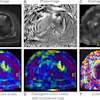
 Overview of the study design, including data collection, radiomics model construction, and biologic interpretation. (A) The primary cohort for model development and evaluation in the training and internal test sets includes 168 patients with colorectal cancer (CRC) from center 1 (Fudan University Shanghai Cancer Center), whereas external testing was performed using data from 85 patients from centers 2 (Huashan Hospital, Fudan University) and 3 (Zhongshan Hospital, Fudan University). For model interpretation, RNA sequencing (RNA-seq) data from 18 patients with CRC in center 1 and single-cell data from 35 patients from the Gene Expression Omnibus (GEO) database are incorporated. Mismatch repair (MMR) protein expression, obtained from pathologic reports in electronic medical records (EMRs), was used to identify patients with consensus molecular subtype 1 (CMS1) CRC. Tissue microarrays (TMAs) from surgically obtained CRC tissues were analyzed for immunohistochemical staining of caudal-type homeobox 2 (CDX2), 5-hydroxytryptamine receptor 2B (HTR2B), FERM domain containing 6 (FRMD6), and zinc finger E-box binding homeobox 1 (ZEB1), and the results were subsequently entered into an online classification tool that assigned patients to CMS2, 3, or 4 subtypes. (B) Radiomics workflow for CMS4 prediction. Lesions were manually delineated on T2-weighted imaging (T2WI) and contrast-enhanced (CE) T1-weighted imaging (T1WI), followed by radiomics feature extraction. Feature selection and model development were performed in the training set using machine-learning algorithms with fivefold cross-validation for model selection, and the final model was evaluated in the internal and external test sets using receiver operating characteristic (ROC) curve analysis. (C) Transcriptomic interpretation workflow. Using the radiomics-predicted CMS4 classification, bulk RNA sequencing (RNA-seq) data were used to perform differential expression analysis between predicted CMS4 and non-CMS4 groups, followed by pathway enrichment analyses to assess biologic relevance. Public single-cell RNA sequencing data from the Gene Expression Omnibus database were then used for cell-type–level interrogation to support interpretation of the associated pathways.RSNA
The multicenter study included 253 patients with a median age of 63 years. Of the total, 163 were men. The team randomly divided the total cohort into training (n = 136), internal test (n = 32), and external validation (n = 85) sets.
The merged MRC4s that combined all imaging features achieved high areas under the receiver operating characteristic curve (AUCs), including 0.85 and 0.84 on the internal and external test sets, respectively. These proved to be higher compared to established deep learning models, including ResNet50, VGG16, and DenseNet201 (AUCs, 0.70 to 0.75; p < 0.01 for all).
The merged MRC4s also stratified the risk of recurrent metastasis (hazard ratio, 5.96; p < 0.001). Transcriptomic analyses showed that the merged MRC4s were linked to transforming growth factor-β and epithelial-mesenchymal transition pathways.
Finally, patients with CMS4 showed higher pathologic nodal staging (p = 0.005), lymphovascular invasion rate (p = 0.043), and perineural invasion rate (p = 0.005). These are consistent with a more aggressive tumor phenotype, the study authors noted.
The authors highlighted this approach as more accessible and cost-effective for hospital diagnostics and management.
“Beyond its accessibility, MRC4s provides unique advantages for surgical planning and surveillance strategies by establishing imaging biomarkers for distant metastasis risk,” they wrote.
The researchers called for prospective studies with larger cohorts and multimodal validation to confirm this approach’s clinical value.
The study “provides a useful starting point” for such studies, according to an accompanying editorial written by Yuki Arita, MD, PhD, and Tae-Hyung Kim, MD, from the Memorial Sloan Kettering Cancer Center in New York City. The two added that the study “broadens the radiogenomic question in colorectal cancer.”
“Instead of asking imaging to mirror a tumor-cell genotype, it explores whether MRI can capture a microenvironmental phenotype that is spatially complex and biologically meaningful,” Arita and Kim wrote. “That framing may be particularly well suited to MRI.”
Read the full study here.

.fFmgij6Hin.png?auto=compress%2Cformat&fit=crop&h=100&q=70&w=100)

.fFmgij6Hin.png?auto=compress%2Cformat&fit=crop&h=167&q=70&w=250)


