Netherlands-based firm Thirona has received 510(k) clearance from the U.S. Food and Drug Administration (FDA) for the latest version of the company's AI-powered CT analysis software, LungQ.
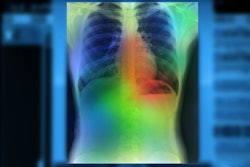
LungQ 4 extends the capabilities of previous versions by improving peripheral airway segmentation, estimating chronic perfusion defects from CT, and improving post-treatment detection of endobronchial implants, according to the firm. The software uses perfusion approximation analysis (PXT) to apply deep learning to estimate approximate chronic perfusion defects directly from CT images. This provides quantitative data for anatomical regions to support treatment target selection in lung volume reduction therapy and advances quantitative imaging in functional lung assessment.
PXT is already available for clinical use in Europe, the UK, and Australia, Thirona said.





![A normal mammogram confirmed by three-year radiologic follow-up illustrates reader-marked regions of interest (ROIs) during (A) unaided (round 1) and (B) artificial intelligence (AI)–assisted (round 2) reading. Each colored dot represents an ROI for recall by a human reader. Readers could mark more than one ROI per case, represented by multiple dots of the same color. During AI-assisted reading, the AI system displayed three visible prompts: two with suspicion of malignancy scores of 35% (left mediolateral oblique [L MLO] and craniocaudal [L CC]) and one with a suspicion of malignancy score of 10% (right craniocaudal [R CC]), shown as polygonal overlays. Without AI, six of 10 readers (60%) marked a false-positive ROI. With AI assistance, this fell to two of 10 (20%). R MLO = right mediolateral oblique.](https://img.auntminnie.com/mindful/smg/workspaces/default/uploads/2026/07/2026-07-14-radiology-mammogram-ai-auto-bias.H0bYO8QlWs.jpg?auto=format%2Ccompress&fit=crop&h=112&q=70&w=112)


