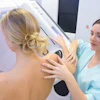
Penn Medicine is launching a mobile mammography program on July 13 at a free community health fair in Philadelphia.
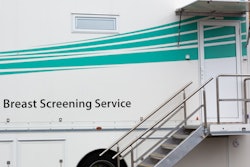
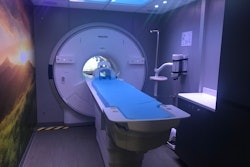
The program will be conducted out of a mobile van and will allow Penn Medicine to offer breast cancer screenings throughout the region year-round, it said.
The community fair is in its fourth year and is hosted in partnership with Philadelphia's Community of Compassion CDC community center. During the fair, providers from Penn Medicine and the Abramson Cancer Center will also offer free take-home colon cancer screening kits, prostate-specific antigen tests for prostate cancer, lung cancer risk assessments, liver and vascular health assessments using ultrasound, eye health screenings, throat cancer screenings, and screenings for diabetes and hypertension, Penn Medicine said. Health insurance is not required to participate, and if an abnormal result is found on any screening test, the Penn Medicine team will help connect the individual to appropriate resources and follow-up care.
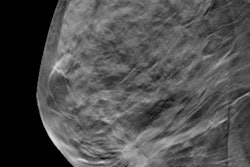
Penn Medicine has been hosting free, yearly mammogram events in partnership with Siemens Healthineers since 2021. The new van features Siemens' 3D mammography technology, the medical center said.
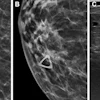
![A normal mammogram confirmed by three-year radiologic follow-up illustrates reader-marked regions of interest (ROIs) during (A) unaided (round 1) and (B) artificial intelligence (AI)–assisted (round 2) reading. Each colored dot represents an ROI for recall by a human reader. Readers could mark more than one ROI per case, represented by multiple dots of the same color. During AI-assisted reading, the AI system displayed three visible prompts: two with suspicion of malignancy scores of 35% (left mediolateral oblique [L MLO] and craniocaudal [L CC]) and one with a suspicion of malignancy score of 10% (right craniocaudal [R CC]), shown as polygonal overlays. Without AI, six of 10 readers (60%) marked a false-positive ROI. With AI assistance, this fell to two of 10 (20%). R MLO = right mediolateral oblique.](https://img.auntminnie.com/mindful/smg/workspaces/default/uploads/2026/07/2026-07-14-radiology-mammogram-ai-auto-bias.H0bYO8QlWs.jpg?auto=format%2Ccompress&fit=crop&h=100&q=70&w=100)


![A normal mammogram confirmed by three-year radiologic follow-up illustrates reader-marked regions of interest (ROIs) during (A) unaided (round 1) and (B) artificial intelligence (AI)–assisted (round 2) reading. Each colored dot represents an ROI for recall by a human reader. Readers could mark more than one ROI per case, represented by multiple dots of the same color. During AI-assisted reading, the AI system displayed three visible prompts: two with suspicion of malignancy scores of 35% (left mediolateral oblique [L MLO] and craniocaudal [L CC]) and one with a suspicion of malignancy score of 10% (right craniocaudal [R CC]), shown as polygonal overlays. Without AI, six of 10 readers (60%) marked a false-positive ROI. With AI assistance, this fell to two of 10 (20%). R MLO = right mediolateral oblique.](https://img.auntminnie.com/mindful/smg/workspaces/default/uploads/2026/07/2026-07-14-radiology-mammogram-ai-auto-bias.H0bYO8QlWs.jpg?auto=format%2Ccompress&fit=crop&h=112&q=70&w=112)