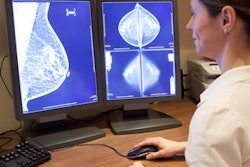
Dense Breast Info (DBI) has issued a statement of support for “Find It Early Act” HR 3086, a bill that addresses insurance barriers to breast cancer screening beyond an initial mammogram.
If passed, HR 3086 would require insurers to cover additional ultrasound or MRI screenings with no out-of-pocket costs for women with dense breasts or at higher risk (for example, BRCA or other disease-causing mutation carriers, those with family/personal history of cancer, or other reason), according to DBI.
Beginning September 2024, the U.S. Food and Drug Administration (FDA) will require that women be informed after their mammograms whether their breasts are “dense” or “not dense.” They may benefit from supplemental screenings; however, insurance coverage for the extra tests is not assured and can vary from state to state and insurer to insurer. HR 3086 seeks to close loopholes inherent in individual state insurance laws and cover both private and public plans including TRICARE and VHA.
The bipartisan bill was first introduced in December 2022 by Reps. Rosa DeLauro (D-CT) and Brian Fitzpatrick (R-PA), and reporter Katie Couric, and reintroduced in May 2023.


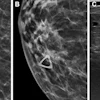
![A normal mammogram confirmed by three-year radiologic follow-up illustrates reader-marked regions of interest (ROIs) during (A) unaided (round 1) and (B) artificial intelligence (AI)–assisted (round 2) reading. Each colored dot represents an ROI for recall by a human reader. Readers could mark more than one ROI per case, represented by multiple dots of the same color. During AI-assisted reading, the AI system displayed three visible prompts: two with suspicion of malignancy scores of 35% (left mediolateral oblique [L MLO] and craniocaudal [L CC]) and one with a suspicion of malignancy score of 10% (right craniocaudal [R CC]), shown as polygonal overlays. Without AI, six of 10 readers (60%) marked a false-positive ROI. With AI assistance, this fell to two of 10 (20%). R MLO = right mediolateral oblique.](https://img.auntminnie.com/mindful/smg/workspaces/default/uploads/2026/07/2026-07-14-radiology-mammogram-ai-auto-bias.H0bYO8QlWs.jpg?auto=format%2Ccompress&fit=crop&h=100&q=70&w=100)


![A normal mammogram confirmed by three-year radiologic follow-up illustrates reader-marked regions of interest (ROIs) during (A) unaided (round 1) and (B) artificial intelligence (AI)–assisted (round 2) reading. Each colored dot represents an ROI for recall by a human reader. Readers could mark more than one ROI per case, represented by multiple dots of the same color. During AI-assisted reading, the AI system displayed three visible prompts: two with suspicion of malignancy scores of 35% (left mediolateral oblique [L MLO] and craniocaudal [L CC]) and one with a suspicion of malignancy score of 10% (right craniocaudal [R CC]), shown as polygonal overlays. Without AI, six of 10 readers (60%) marked a false-positive ROI. With AI assistance, this fell to two of 10 (20%). R MLO = right mediolateral oblique.](https://img.auntminnie.com/mindful/smg/workspaces/default/uploads/2026/07/2026-07-14-radiology-mammogram-ai-auto-bias.H0bYO8QlWs.jpg?auto=format%2Ccompress&fit=crop&h=112&q=70&w=112)