A new study of over 1,600 current or eligible Medicare recipients shows that nearly half of women report not receiving a mammogram in the last three years.
The study, led by the Radiology Patient Action Network, also found that 80% of Americans are concerned with proposed cuts to Medicare, and 90% view maintaining Medicare coverage as important.
Network leaders said these results show that Congress should take note of these findings and protect Medicare. Almost half of the study's respondents said they would be less likely to support a member of Congress if they advocate for cuts.
Also, one in four current patients reported having difficulty scheduling doctors' appointments due to delays or rescheduling.
These results corroborate findings from other recent studies showing that many women are not receiving their recommended mammograms.
The survey was conducted between September 25 and 27 and included 1,632 Americans either enrolled in Medicare or Medicare-eligible. The study was jointly sponsored by the Medical Imaging and Technology Alliance (MITA), Imaging for a Cause, and the Radiology Business Management Association (RBMA). It was conducted by the Remington Research Group.
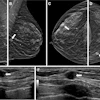


![A normal mammogram confirmed by three-year radiologic follow-up illustrates reader-marked regions of interest (ROIs) during (A) unaided (round 1) and (B) artificial intelligence (AI)–assisted (round 2) reading. Each colored dot represents an ROI for recall by a human reader. Readers could mark more than one ROI per case, represented by multiple dots of the same color. During AI-assisted reading, the AI system displayed three visible prompts: two with suspicion of malignancy scores of 35% (left mediolateral oblique [L MLO] and craniocaudal [L CC]) and one with a suspicion of malignancy score of 10% (right craniocaudal [R CC]), shown as polygonal overlays. Without AI, six of 10 readers (60%) marked a false-positive ROI. With AI assistance, this fell to two of 10 (20%). R MLO = right mediolateral oblique.](https://img.auntminnie.com/mindful/smg/workspaces/default/uploads/2026/07/2026-07-14-radiology-mammogram-ai-auto-bias.H0bYO8QlWs.jpg?auto=format%2Ccompress&fit=crop&h=100&q=70&w=100)


![A normal mammogram confirmed by three-year radiologic follow-up illustrates reader-marked regions of interest (ROIs) during (A) unaided (round 1) and (B) artificial intelligence (AI)–assisted (round 2) reading. Each colored dot represents an ROI for recall by a human reader. Readers could mark more than one ROI per case, represented by multiple dots of the same color. During AI-assisted reading, the AI system displayed three visible prompts: two with suspicion of malignancy scores of 35% (left mediolateral oblique [L MLO] and craniocaudal [L CC]) and one with a suspicion of malignancy score of 10% (right craniocaudal [R CC]), shown as polygonal overlays. Without AI, six of 10 readers (60%) marked a false-positive ROI. With AI assistance, this fell to two of 10 (20%). R MLO = right mediolateral oblique.](https://img.auntminnie.com/mindful/smg/workspaces/default/uploads/2026/07/2026-07-14-radiology-mammogram-ai-auto-bias.H0bYO8QlWs.jpg?auto=format%2Ccompress&fit=crop&h=112&q=70&w=112)