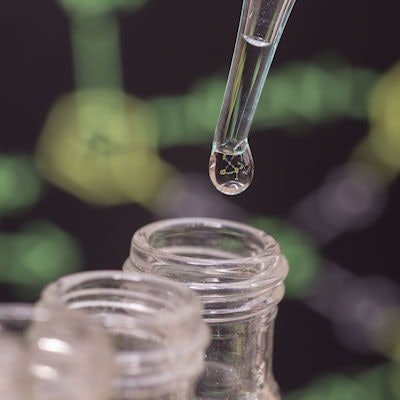
Namida Lab has launched a tear-based, at-home diagnostic test that identifies protein biomarkers related to breast abnormalities. The test could help women determine when to schedule a mammogram.
Namida Lab has developed the Auria diagnostic test, which provides a personalized score and classification that corresponds to an urgency level, indicating when a mammogram should be scheduled. The laboratory-developed test is available to women between the ages of 33 and 85 with an average risk of developing breast cancer, regardless of their breast tissue density.
Nevertheless, Auria is not a diagnostic test for breast cancer and is not intended to replace a mammogram, according to the company.







![A normal mammogram confirmed by three-year radiologic follow-up illustrates reader-marked regions of interest (ROIs) during (A) unaided (round 1) and (B) artificial intelligence (AI)–assisted (round 2) reading. Each colored dot represents an ROI for recall by a human reader. Readers could mark more than one ROI per case, represented by multiple dots of the same color. During AI-assisted reading, the AI system displayed three visible prompts: two with suspicion of malignancy scores of 35% (left mediolateral oblique [L MLO] and craniocaudal [L CC]) and one with a suspicion of malignancy score of 10% (right craniocaudal [R CC]), shown as polygonal overlays. Without AI, six of 10 readers (60%) marked a false-positive ROI. With AI assistance, this fell to two of 10 (20%). R MLO = right mediolateral oblique.](https://img.auntminnie.com/mindful/smg/workspaces/default/uploads/2026/07/2026-07-14-radiology-mammogram-ai-auto-bias.H0bYO8QlWs.jpg?auto=format%2Ccompress&fit=crop&h=112&q=70&w=112)


