Tuesday, November 30 | 9:30 a.m.-10:30 a.m. | SSPH09-6 | Room TBA
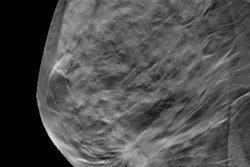
Researchers will present results from a "plug-and-play" artificial intelligence (AI) algorithm that they say has the potential to improve detection of microcalcifications on digital breast tomosynthesis (DBT) images.Mingjie Gao, a doctoral candidate from the University of Michigan, will talk about the AI model, which used an alternating direction method of multipliers algorithm as the framework and a "plugged in," pretrained deep convolutional neural network denoiser for the reconstruction of DBT images.
The researchers found that the algorithm improved the contrast-to-noise ratio and detectability index for phantom and human microcalcifications.
"The plug-and-play reconstruction regularized with the deep convolutional neural network denoiser has the potential to reduce noise, enhance subtle microcalcifications, and improve the detectability of microcalcifications for DBTs," they said.
To find out how much improvement was seen, attend this talk.