Tuesday, November 30 | 8:00 a.m.-9:00 a.m. | SSBR05-6 | Room TBA
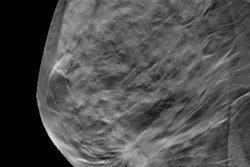
In this presentation, researchers will talk about their findings on distributing volumetric breast density across screening populations around the world for measuring risk.Ioannis Sechopoulos, PhD, from Radboud University Medical Center in the Netherlands will present the team's findings, which showed that the same criteria for categorizing breast density based on volumetric breast density can be used worldwide when breast thickness is considered.
Data from 780,648 screened women ages 50 and older were included. The screening populations were based in the U.S., the Netherlands, Norway, Brazil, Malaysia, and Greece.
The team found that breasts of comparable thickness have similar volumetric breast density distributions across populations, suggesting that a single population-based model may have use for applications such as radiation dose estimates or risk modeling.
Find out more by attending this morning session.