Agendia is highlighting research shared at the virtual 2021 American Society of Clinical Oncology meeting that shows its MammaPrint 70-gene signature test accurately identifies indolent, low-risk breast cancers.
The research demonstrated a higher than 99% eight-year breast cancer-specific survival rate for patients who were characterized as MammaPrint Ultra Low Risk status, no matter their clinical risk, the company said.
The research follows up on the MINDACT trial, which was sponsored by the European Organization for Research and Treatment of Cancer and sought to determine whether MammaPrint could downgrade clinically high-risk patients with early-stage breast cancer from chemotherapy treatment. MINDACT included almost 7,000 patients and had a median follow-up of 8.7 years.
This study focused on 1,000 women with MammaPrint Ultra Low Risk status who participated in MINDACT and found they had an eight-year distant metastasis-free interval of 97%, first author Dr. Josephine Lopes Cardozo of the Netherlands Cancer Institute said in an oral presentation on June 6 at ASCO 2021.
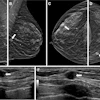
![A normal mammogram confirmed by three-year radiologic follow-up illustrates reader-marked regions of interest (ROIs) during (A) unaided (round 1) and (B) artificial intelligence (AI)–assisted (round 2) reading. Each colored dot represents an ROI for recall by a human reader. Readers could mark more than one ROI per case, represented by multiple dots of the same color. During AI-assisted reading, the AI system displayed three visible prompts: two with suspicion of malignancy scores of 35% (left mediolateral oblique [L MLO] and craniocaudal [L CC]) and one with a suspicion of malignancy score of 10% (right craniocaudal [R CC]), shown as polygonal overlays. Without AI, six of 10 readers (60%) marked a false-positive ROI. With AI assistance, this fell to two of 10 (20%). R MLO = right mediolateral oblique.](https://img.auntminnie.com/mindful/smg/workspaces/default/uploads/2026/07/2026-07-14-radiology-mammogram-ai-auto-bias.H0bYO8QlWs.jpg?auto=format%2Ccompress&fit=crop&h=100&q=70&w=100)


![A normal mammogram confirmed by three-year radiologic follow-up illustrates reader-marked regions of interest (ROIs) during (A) unaided (round 1) and (B) artificial intelligence (AI)–assisted (round 2) reading. Each colored dot represents an ROI for recall by a human reader. Readers could mark more than one ROI per case, represented by multiple dots of the same color. During AI-assisted reading, the AI system displayed three visible prompts: two with suspicion of malignancy scores of 35% (left mediolateral oblique [L MLO] and craniocaudal [L CC]) and one with a suspicion of malignancy score of 10% (right craniocaudal [R CC]), shown as polygonal overlays. Without AI, six of 10 readers (60%) marked a false-positive ROI. With AI assistance, this fell to two of 10 (20%). R MLO = right mediolateral oblique.](https://img.auntminnie.com/mindful/smg/workspaces/default/uploads/2026/07/2026-07-14-radiology-mammogram-ai-auto-bias.H0bYO8QlWs.jpg?auto=format%2Ccompress&fit=crop&h=112&q=70&w=112)