Tuesday, November 27 | 3:30 p.m.-3:40 p.m. | SSJ02-04 | Room E353C
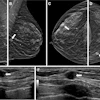
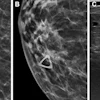
Breast MRI performs better for breast cancer treatment staging than the combination of digital breast tomosynthesis (DBT) and ultrasound automated breast volume scanning (ABVS) -- but the latter works well enough to offer patients an alternative if MRI isn't available, Italian researchers have found.Dr. Rossano Girometti from the University of Udine will share results from a study that included 73 patients with histologically proven breast cancer who underwent preoperative DBT plus ABVS, as well as 1.5-tesla MRI, between July 2015 and July 2016. The group used histology or one-year follow-up as the standard of reference to calculate cancer detection accuracy for both imaging approaches.
Out of 160 lesions, 108 were cancerous and 52 were benign. Diagnostic accuracy was comparable for DBT-ABVS and breast MRI (90.0% versus 93.8%), although DBT-ABVS had lower sensitivity and positive predictive value for additional disease (76.5% and 91.7%) than breast MRI (78.8% and 93.4%).
In addition, DBT-ABVS missed six lesions that breast MRI found, two of which were invasive cancers and one of which was ductal carcinoma in situ.
DBT-ABVS is less accurate than MRI in staging breast cancer treatment, but its diagnostic accuracy is good enough to offer an alternative if breast MRI is unavailable, the group concluded.