Wednesday, November 28 | 10:40 a.m.-10:50 a.m. | SSK02-02 | Room E451B
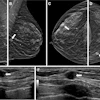
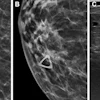
Deep-learning networks can help classify breast tissue density, according to researchers from NYU Langone Medical Center.In this Wednesday morning scientific presentation, Dr. Eric Kim will present results from a study in which he and his colleagues trained an artificial intelligence algorithm to assess breast density on 200,000 digital screening mammograms taken between 2010 and 2016.
Once the algorithm was trained, the researchers performed a reader study comparing its performance with that of three radiologists, who evaluated density in 100 mammograms using the BI-RADS scale. Kim and colleagues evaluated the performance of both the algorithm and the readers using the area under the receiver operating characteristic curve (AUC).
The algorithm's AUC was 0.93, while the radiologists' AUC was 0.89, suggesting that the deep-learning network could offer radiologists support for assessing breast density.
"The level of agreement between the trained classifier and the classes in the data was found to be similar to that between the radiologists and the classes in the data, as well as among the radiologists," the group wrote. "The [algorithm] provides quantitative, reproducible prediction of breast density."
This paper received a Roadie 2018 award for the most popular abstract by page views in this Road to RSNA section.