Computer-aided detection (CAD) developer iCAD is touting the results of a new study using its digital breast tomosynthesis (DBT) cancer detection software. The study demonstrated significant positive results for clinical performance and workflow efficiency.
The software increased improvements in both reader sensitivity (8.0% on average) and specificity (6.9% on average). In addition, when reading tomosynthesis cases with the software, radiologists' reading times were reduced by more than 52.7%.
The software is trained to detect malignancies and determine the probability of malignant findings, providing radiologists with a "certainty of finding" score for each case and each detected lesion. These scores represent the algorithm's confidence that the detected soft-tissue densities and calcifications are malignant.
The software is available for use in Europe and is pending clearance by the U.S. Food and Drug Administration (FDA).





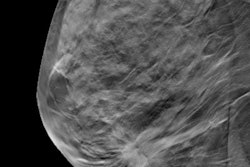


![A normal mammogram confirmed by three-year radiologic follow-up illustrates reader-marked regions of interest (ROIs) during (A) unaided (round 1) and (B) artificial intelligence (AI)–assisted (round 2) reading. Each colored dot represents an ROI for recall by a human reader. Readers could mark more than one ROI per case, represented by multiple dots of the same color. During AI-assisted reading, the AI system displayed three visible prompts: two with suspicion of malignancy scores of 35% (left mediolateral oblique [L MLO] and craniocaudal [L CC]) and one with a suspicion of malignancy score of 10% (right craniocaudal [R CC]), shown as polygonal overlays. Without AI, six of 10 readers (60%) marked a false-positive ROI. With AI assistance, this fell to two of 10 (20%). R MLO = right mediolateral oblique.](https://img.auntminnie.com/mindful/smg/workspaces/default/uploads/2026/07/2026-07-14-radiology-mammogram-ai-auto-bias.H0bYO8QlWs.jpg?auto=format%2Ccompress&fit=crop&h=112&q=70&w=112)


