Non-Hispanic black women diagnosed with breast cancer, specifically those with estrogen-receptor-positive tumors, are at a significantly greater risk for breast cancer death than non-Hispanic white women, according to a study presented at the American Association for Cancer Research (AACR) meeting in San Diego.
The largest disparity in risk was found in the first three years after diagnosis, according to Erica Warner, ScD, a postdoctoral fellow at Harvard School of Public Health.
Warner and colleagues conducted a study of 19,480 women who presented to National Comprehensive Cancer Network centers with stage I to stage III breast cancer between January 2000 and December 2007. The researchers compared breast-cancer-specific mortality among 634 Asian women, 1,291 Hispanic women, 1,500 non-Hispanic black women, and 16,055 non-Hispanic white women.
After a median follow-up of 6.9 years, the study showed that black women had a 48% higher risk for breast cancer death in the first three years after diagnosis compared to white women. The risk for early death among black women was more striking among those with estrogen-receptor-positive tumors, according to Warner.
The findings show that clinical management and follow-up for patients with breast cancer, particularly black women, are important in the first few years after diagnosis, she said.
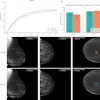

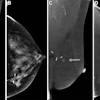


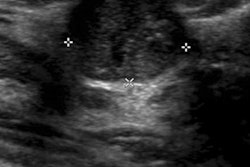




![A normal mammogram confirmed by three-year radiologic follow-up illustrates reader-marked regions of interest (ROIs) during (A) unaided (round 1) and (B) artificial intelligence (AI)–assisted (round 2) reading. Each colored dot represents an ROI for recall by a human reader. Readers could mark more than one ROI per case, represented by multiple dots of the same color. During AI-assisted reading, the AI system displayed three visible prompts: two with suspicion of malignancy scores of 35% (left mediolateral oblique [L MLO] and craniocaudal [L CC]) and one with a suspicion of malignancy score of 10% (right craniocaudal [R CC]), shown as polygonal overlays. Without AI, six of 10 readers (60%) marked a false-positive ROI. With AI assistance, this fell to two of 10 (20%). R MLO = right mediolateral oblique.](https://img.auntminnie.com/mindful/smg/workspaces/default/uploads/2026/07/2026-07-14-radiology-mammogram-ai-auto-bias.H0bYO8QlWs.jpg?auto=format%2Ccompress&dpr=2&fit=crop&h=167&q=70&w=250)


