Siemens Healthcare said it presented data from an international survey about breast cancer screening knowledge at the European Congress of Radiology (ECR) in Vienna.
German market research institute Gesellschaft für Konsumforschung (GfK) surveyed women ages 25 to 65 about the topic of breast cancer screening, addressing women's experiences with breast cancer examinations, their general knowledge about early detection, and their personal feelings about the trustworthiness of information sources. A total of 4,000 women from Austria, Brazil, China, Germany, India, Russia, Sweden, and the U.S. participated in the survey, according to Siemens.
Eighty-two percent of the survey respondents stated that the topic of early detection is very important to them. Survey participants in Germany, Sweden, and Austria said that regular screening examinations can detect changes in the breast earlier or even prevent diseases; in India, 35% of survey participants cited increasing breast cancer awareness as a reason why they find breast cancer screening important.
On average, of all surveyed countries, only 40% of the interviewed women felt they were well or very well informed, Siemens said.
Based on the survey results, Siemens plans to prepare country-specific informational material for breast cancer screening that can support physicians in instructing their patients and increasing their awareness of the disease.
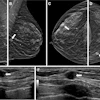


![A normal mammogram confirmed by three-year radiologic follow-up illustrates reader-marked regions of interest (ROIs) during (A) unaided (round 1) and (B) artificial intelligence (AI)–assisted (round 2) reading. Each colored dot represents an ROI for recall by a human reader. Readers could mark more than one ROI per case, represented by multiple dots of the same color. During AI-assisted reading, the AI system displayed three visible prompts: two with suspicion of malignancy scores of 35% (left mediolateral oblique [L MLO] and craniocaudal [L CC]) and one with a suspicion of malignancy score of 10% (right craniocaudal [R CC]), shown as polygonal overlays. Without AI, six of 10 readers (60%) marked a false-positive ROI. With AI assistance, this fell to two of 10 (20%). R MLO = right mediolateral oblique.](https://img.auntminnie.com/mindful/smg/workspaces/default/uploads/2026/07/2026-07-14-radiology-mammogram-ai-auto-bias.H0bYO8QlWs.jpg?auto=format%2Ccompress&fit=crop&h=100&q=70&w=100)


![A normal mammogram confirmed by three-year radiologic follow-up illustrates reader-marked regions of interest (ROIs) during (A) unaided (round 1) and (B) artificial intelligence (AI)–assisted (round 2) reading. Each colored dot represents an ROI for recall by a human reader. Readers could mark more than one ROI per case, represented by multiple dots of the same color. During AI-assisted reading, the AI system displayed three visible prompts: two with suspicion of malignancy scores of 35% (left mediolateral oblique [L MLO] and craniocaudal [L CC]) and one with a suspicion of malignancy score of 10% (right craniocaudal [R CC]), shown as polygonal overlays. Without AI, six of 10 readers (60%) marked a false-positive ROI. With AI assistance, this fell to two of 10 (20%). R MLO = right mediolateral oblique.](https://img.auntminnie.com/mindful/smg/workspaces/default/uploads/2026/07/2026-07-14-radiology-mammogram-ai-auto-bias.H0bYO8QlWs.jpg?auto=format%2Ccompress&fit=crop&h=112&q=70&w=112)