Dear Women's Imaging Insider,
There's been exciting news in breast cancer imaging and treatment since our last communication in February.
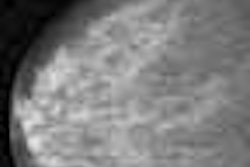
First, we have an article on computed radiography for mammography. This multi-institutional investigational study, lead by Dr. Jeffrey Quam from the Mayo Clinics in Rochester, MN, and Scottsdale, AZ, found that CRM offered a greater level of lesion conspicuity, and may be particularly helpful in dense breasts. Click here to read more.
Next is a paper by Dr. Bruno D. Fornage and associates at the M. D. Anderson Cancer Center in Houston on the value of ultrasound-guided radiofrequency ablation for the local treatment of small invasive breast malignancies. Catch up on the details here.
The Women's Imaging Digital Community is also featuring reports from the 2004 American Association of Cancer Research meeting Orlando, FL. Michigan investigators believe they have pinpointed a potential biomarker for excluding invasive breast cancer in women with newly diagnosed breast lesions. And a study out of Harvard University in Cambridge, MA, determined that survival can be improved for breast cancer patients who engaged in a moderate amount of physical activity after diagnosis.
Finally, the Canadian Breast Cancer Network (CBCN) seeks input for a planned Web site on the breast cancer needs of rural and remote populations. If you would like to help out, click here.