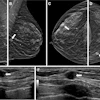
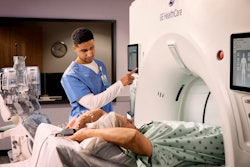
GE HealthCare (GEHC) is launching its Invenia Automated Breast Ultrasound (ABUS) Premium, an AI-powered 3D ultrasound platform that the company says can further assist in imaging women with dense breasts.
Invenia ABUS Premium is designed to manage high breast patient volumes and features several AI tools. These include Verisound AI tools that feature scan quality assessment for immediate qualitative evaluation during the exam for proper breast coverage and positioning, and auto nipple detection for consistent nipple marker positions. The Fast Scan tool, meanwhile, increases scan speed by up to 40%, the company highlighted, while cSound Imageformer capabilities automatically create focus at every pixel.
Physicians can use Invenia ABUS Viewer with AI Assistant to review and interpret patient exams either from their practice or remotely. GE HealthCare said that ABUS Premium's non-invasive design aims to help in the patient experience, reduce unnecessary biopsies, and avoid the use of ionizing radiation. The Reverse Curve transducer follows the contour of a woman’s breast anatomy, while selectable compression levels provide personalized comfort during the exam, the company added.
GE said that Invenia ABUS Premium will be launched in key countries throughout 2025 and that it has received premarket approval from the U.S. Food and Drug Administration (FDA). It was featured at the 2025 European Congress of Radiology (ECR) and will also be showcased at the National Consortium of Breast Centers (NCoBC) 2025 and 2025 Society of Breast Imaging (SBI) Symposium.