Dear AuntMinnie Member,
A series of new research studies highlights the benefits -- and drawbacks -- of full-field digital mammography (FFDM) in two stories we're featuring this week in our Women's Imaging Digital Community.
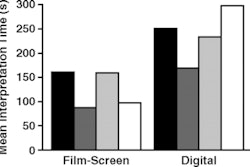
On the downside, FFDM images can take longer to interpret than conventional analog images, yielding workflow and economic effects on women's imaging centers that use digital technology, according to an article by staff writer Kate Madden Yee. U.S. researchers found that interpretation times were nearly double for digital technology, according to the article you'll find by clicking here.
On the positive side, two presentations from the RSNA 2008 conference highlight the utility of FFDM in a screening environment. The studies, one from Ireland and one from Norway, found that using FFDM for screening resulted in higher cancer detection rates compared to analog mammography. Find out more by clicking here.
Finally, new research out of Australia provides evidence that screening mammography helps find cancers earlier. Researchers found that women whose cancer was discovered by mammography had smaller tumors than those who presented after experiencing symptoms. Get the rest of the story by clicking here, or visit the Women's Imaging Digital Community at women.auntminnie.com.
Healthcare spending slows in 2007
In other news, a study released today by the U.S. Centers for Medicare and Medicaid Services (CMS) shows that healthcare spending in the U.S. in 2007 rose at the slowest rate in 10 years. The research is perhaps an indication that the agency's efforts to rein in healthcare costs are having an impact ... read more by clicking here.