Dear AuntMinnie Member,
AuntMinnie.com's Women's Imaging Digital Community kicks off its observance of Breast Cancer Awareness Month with articles on some of the hottest issues in breast imaging.
First, staff writer Kate Madden Yee brings you a new study published yesterday online in the New England Journal of Medicine that reports positive results for computer-aided detection (CAD) software for mammography screening. In a large, multicenter study, U.K. researchers found that a single reader using CAD was just as accurate as two radiologists performing double reading.
If you remember, it was a year and a half ago that another study in NEJM found that CAD actually reduced the accuracy of sites using it. Whether the new study will counteract some of the fallout from that paper remains to be seen, but the new data are a positive step forward for the technology. Read all about it by clicking here.
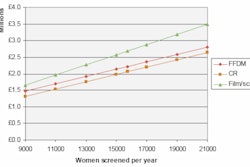
Another featured article reports on the work of Austrian researchers who compared the image quality of two digital technologies, full-field digital mammography (FFDM) and computed radiography (CR)-based mammography.
They found that a panel of readers preferred the image quality of FFDM over CR mammography by a statistically significant margin. But did FFDM's prettier pictures actually result in higher diagnostic accuracy? Find out by clicking here.
For more coverage of women's imaging throughout the month, be sure to check in with the Women's Imaging Digital Community at women.auntminnie.com.