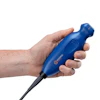
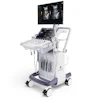
A new body imaging system that combines rotational ultrasound (RUS) with photoacoustic tomography (PAT) aims to improve body imaging.
Researchers from the University of Southern California (USC) in Los Angeles and the California Institute of Technology in Pasadena created the RUS-PAT system and reported success in a recent study.
In this episode, Charles Liu, MD, PhD, discusses how the system works, the study's results, potential applications for RUS-PAT, and future directions in research. Along with being a co-senior author on the published paper, Liu is a professor of clinical neurological surgery, urology, and surgery at the USC Keck School of Medicine and director of the USC Neurorestoration Center.
Researchers on the project tested RUS-PAT on multiple regions of the human body, including the brain, breast, hand, and foot. The system captured images of both tissue structure and blood vessels across a region up to 10 cm wide and in about 10 seconds.
The researchers have also highlighted benefits of using the system. These include lower costs to build compared to an MRI scanner, avoiding the radiation needed for x-ray and CT scans, and resulting in more sophisticated images than conventional ultrasound.