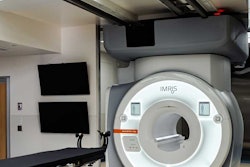
West Palm Beach, FL-based private equity firm Grovecourt Capital Partners has acquired intraoperative MRI technology developer IMRIS Imaging. Terms were not disclosed.
Founded in Chaska, MN, in 2005, IMRIS designs, manufactures, and services proprietary intraoperative MRI suites used by hospitals and cancer centers worldwide. IMRIS developed a movable MRI that operates on a ceiling-mounted rail system so that it can glide between a diagnostic room and operating room, Grovecourt noted. The scanner enables patients to remain in a sterile surgical position for intraoperative imaging during neurosurgery and other procedures, the firm added.
The acquisition will help IMRIS develop intraoperative MRI imaging in emerging applications, such as laser ablation and high-intensity focused ultrasound procedures, an IMRIS official said.




![Overview of the study design. (A) The fully automated deep learning framework was developed to estimate body composition (BC) (defined as subcutaneous adipose tissue [SAT] in liters; visceral adipose tissue [VAT] in liters; skeletal muscle [SM] in liters; SM fat fraction [SMFF] as a percentage; and intramuscular adipose tissue [IMAT] in deciliters) from MRI. The fully automated framework comprised one model (model 1) to quantify different BC measures (SAT, VAT, SM, SMFF, and IMAT) as three-dimensional (3D) measures from whole-body MRI scans. The second model (model 2) was trained to identify standardized anatomic landmarks along the craniocaudal body axis (z coordinate field), which allowed for subdividing the whole-body measures into different subregions typically examined on clinical routine MRI scans (chest, abdomen, and pelvis). (B) BC was quantified from whole-body MRI in over 66,000 individuals from two large population-based cohort studies, the UK Biobank (UKB) (36,317 individuals) and the German National Cohort (NAKO) (30,291 individuals). Bar graphs show age distribution by sex and cohort. BMI = body mass index. (C) After the performance assessment of the fully automated framework, the change in BC measures, distributions, and profiles across age decades were investigated. Age-, sex-, and height-adjusted body composition reference curves were calculated and made publicly available in a web-based z-score calculator (https://circ-ml.github.io).](https://img.auntminnie.com/mindful/smg/workspaces/default/uploads/2026/05/body-comp.XgAjTfPj1W.jpg?auto=format%2Ccompress&fit=crop&h=112&q=70&w=112)