
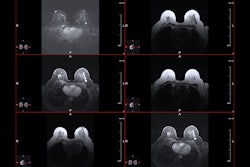
Women with high-risk pathological variants for breast cancer as identified by genetic testing and risk assessment are about 10 times more likely to undergo breast MRI, a study published January 13 in JAMA Network Open has found.
Researchers led by Leah Naghi, MD, from the City of Hope National Medical Center in Duarte, CA, reported that women with inherited pathological variants who discuss their breast cancer risk with their doctors had more consistent MRI uptake than women with lower estimated risk.
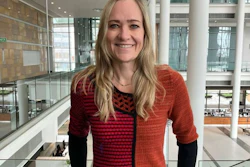
“These findings are particularly valuable for radiologists, as they highlight the importance of a multidisciplinary team approach in managing care for high-risk patients,” Naghi told AuntMinnie.com.
Women with elevated breast cancer risk are recommended for supplemental MRI. However, the researchers noted that it’s not well known how genetic testing prior to imaging impacts women’s uptake of breast MRI.
Naghi and co-authors studied trends in breast MRI uptake following counseling and multiplex gene panel testing (MGPT), which simultaneously screens for several cancer susceptibility genes. Their research included 638 women with an average age of 50.7 years at testing, which took place between 2014 and 2016.
After counseling and testing, the women responded to surveys about breast MRI screening at three, six, 12, and 24 months. They also responded to a final survey between three and four years after counseling.
The team from there categorized the women based on breast cancer risk from genetic testing results and Tyrer-Cuzick model-calculated risk for the following: a BRCA or other high-risk pathogenic variant, a moderate-risk pathological variant, a higher lifetime breast cancer risk (20% or greater), or a lower lifetime breast cancer risk (less than 20%).
Of the total women, 43 had a BRCA or other high-risk pathological variant, 16 had a moderate pathological variant, 146 had a higher lifetime breast cancer risk, and 433 had a lower lifetime breast cancer risk. Also, 52 women identified as Asian, 21 as Black, 271 as Hispanic, and 255 as white.
Women with high and moderate breast cancer pathological variants were more likely to undergo breast MRI than those with low cancer risk, the team reported. This included odds ratios (ORs) of 9.81 for women with a BRCA or other high-risk pathological variant (p < 0.001) and 4.12 for women with a moderate-risk pathological variant.
Also, women were nearly 16 times more likely to consistently undergo early MRI screening compared with women who had a lower lifetime breast cancer risk (OR, 15.81).
Naghi said these findings should reassure radiologists that with proper genetic testing and counseling, patients are likely to adhere to guideline-recommended MRI screening at high rates.
“We hope this encourages radiologists to serve as advocates, guiding women toward genetic counseling and testing to optimize their care,” she told AuntMinnie.com.
She added that future research will examine therapeutic decision-making in a larger cohort of individuals through the Implementing Next-generation Sequencing for Precision Intervention and Risk Evaluation (INSPIRE) study at the City of Hope Cancer Center in Duarte, CA. Here, universal germline testing is offered to patients both affected and unaffected by cancer.
“To date, over 30,000 individuals have been recruited to the INSPIRE study,” Naghi said.
The full study can be found here.
.fFmgij6Hin.png?auto=compress%2Cformat&fit=crop&h=100&q=70&w=100)


.fFmgij6Hin.png?auto=compress%2Cformat&fit=crop&h=167&q=70&w=250)


