A preliminary report into the death of a man pulled into the bore of an MRI scanner at an Indian hospital will blame an "overburdened" staff at the Mumbai hospital for not following proper security and safety procedures at the time of the January accident.
An April 8 article in the Hindustan Times quotes a senior civic official with knowledge of the report as stating that there is a "strict procedure in place, with checks and balances to ensure such incidents do not occur. However, clearly, the procedure could not be followed that day. The probe report will find out why, but reasons include overburdened staff and facilities at hospitals."
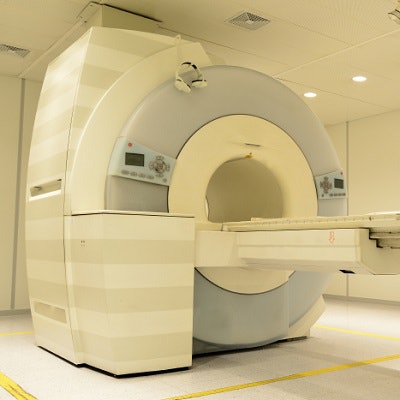
Rajesh Maruti Maru was killed at Nair Hospital on January 27 when an attendant allegedly asked him to carry a metal oxygen tank into the MRI suite where his mother-in-law was about to undergo a scan. The strength of the magnet drew 32-year-old Maru and the tank into the magnet's bore, where the metal cylinder exploded. Maru inhaled the exposed gas and died shortly thereafter of complications from pneumothorax.
An earlier investigation into the incident found that two hospital employees who were at the scene were not from the radiology department and were not trained on proper MRI safety protocols. A radiology resident who was on duty at the time of Maru's scan was arrested, but the local branch of the Indian Radiological and Imaging Association (IRIA) has come to his defense, claiming that the incident was the result of staffing decisions made by the management of Nair Hospital.
The hospital is operated by Brihanmumbai Municipal, which plans to reduce the workload for staff by, among other initiatives, replacing private security guards with government personnel and using ID cards for the family of patients to restrict entry to two people per patient, the news report noted.
Additional safety measures are expected to come from the final report.


![Overview of the study design. (A) The fully automated deep learning framework was developed to estimate body composition (BC) (defined as subcutaneous adipose tissue [SAT] in liters; visceral adipose tissue [VAT] in liters; skeletal muscle [SM] in liters; SM fat fraction [SMFF] as a percentage; and intramuscular adipose tissue [IMAT] in deciliters) from MRI. The fully automated framework comprised one model (model 1) to quantify different BC measures (SAT, VAT, SM, SMFF, and IMAT) as three-dimensional (3D) measures from whole-body MRI scans. The second model (model 2) was trained to identify standardized anatomic landmarks along the craniocaudal body axis (z coordinate field), which allowed for subdividing the whole-body measures into different subregions typically examined on clinical routine MRI scans (chest, abdomen, and pelvis). (B) BC was quantified from whole-body MRI in over 66,000 individuals from two large population-based cohort studies, the UK Biobank (UKB) (36,317 individuals) and the German National Cohort (NAKO) (30,291 individuals). Bar graphs show age distribution by sex and cohort. BMI = body mass index. (C) After the performance assessment of the fully automated framework, the change in BC measures, distributions, and profiles across age decades were investigated. Age-, sex-, and height-adjusted body composition reference curves were calculated and made publicly available in a web-based z-score calculator (https://circ-ml.github.io).](https://img.auntminnie.com/mindful/smg/workspaces/default/uploads/2026/05/body-comp.XgAjTfPj1W.jpg?auto=format%2Ccompress&fit=crop&h=100&q=70&w=100)


![Overview of the study design. (A) The fully automated deep learning framework was developed to estimate body composition (BC) (defined as subcutaneous adipose tissue [SAT] in liters; visceral adipose tissue [VAT] in liters; skeletal muscle [SM] in liters; SM fat fraction [SMFF] as a percentage; and intramuscular adipose tissue [IMAT] in deciliters) from MRI. The fully automated framework comprised one model (model 1) to quantify different BC measures (SAT, VAT, SM, SMFF, and IMAT) as three-dimensional (3D) measures from whole-body MRI scans. The second model (model 2) was trained to identify standardized anatomic landmarks along the craniocaudal body axis (z coordinate field), which allowed for subdividing the whole-body measures into different subregions typically examined on clinical routine MRI scans (chest, abdomen, and pelvis). (B) BC was quantified from whole-body MRI in over 66,000 individuals from two large population-based cohort studies, the UK Biobank (UKB) (36,317 individuals) and the German National Cohort (NAKO) (30,291 individuals). Bar graphs show age distribution by sex and cohort. BMI = body mass index. (C) After the performance assessment of the fully automated framework, the change in BC measures, distributions, and profiles across age decades were investigated. Age-, sex-, and height-adjusted body composition reference curves were calculated and made publicly available in a web-based z-score calculator (https://circ-ml.github.io).](https://img.auntminnie.com/mindful/smg/workspaces/default/uploads/2026/05/body-comp.XgAjTfPj1W.jpg?auto=format%2Ccompress&fit=crop&h=112&q=70&w=112)