7-tesla functional MRI has illuminated brain differences among individuals with inflammatory bowel disease (IBD) compared to those without the condition, according to poster data presented May 14 at the International Society of Magnetic Resonance in Medicine (ISMRM) meeting in Cape Town, South Africa.
As chronic illness can diminish a person's psychological resilience, the research findings could help create "more effective treatment and prevention strategies, including targeted resilience training and novel pharmacological interventions," wrote a team led by Hanna Antonia Hartmann, MD, of RWTH Aachen University Hospital in Germany.
Resilience is the ability to adapt to stress, Hartmann and colleagues explained, writing that "low resilience is a risk factor for psychiatric disorders such as major depressive disorder and has a major impact on quality of life." The group also noted that IBD shows "high psychiatric comorbidity linked to reduced resilience," which may be in part due to brain function disrupted by altered gut homeostasis.
The investigators conducted a study that combined psychological test score results with 7-tesla fMRI in hopes of gaining a better understanding of neural correlates and mechanisms contributing to high or low psychological resilience in patients with IBD compared to those without the condition. They included 29 IBD patients and 29 healthy controls who were matched by age and gender, assessing resilience using the Connor-Davidson Resilience Scale (CD-RISC-25) -- with higher scores indicating more resilience.
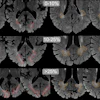
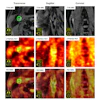
 SBC group-level analysis results showing a 3D glass-brain visualization of clusters identified via GLM analysis (top row within subplots) and the effect sizes (beta values) of IBD and HC within the identified clusters (bottom row, right corner). Differences in connectivity are shown for the precuneus as the seed region.Hanna Antonia Hartmann, MD, and ISMRM
Overall, the team reported lower resilience scores in IBD patients compared to healthy counterparts after controlling for age and gender (p = 0.001). The main brain regions that differed between IBD patients and healthy controls were the precuneus and the frontal pole, both of which belong to the brain's Default Mode Network (DMN), a system responsible for "mind-wandering," self-reflection, and internal thought.
"Given that chronic pain and stress disrupt the DMN and that the DMN is strongly linked to psychiatric conditions, our findings may reflect neural correlates of lower resilience," the group concluded. "These results provide initial evidence for the … influence of chronic gut inflammation on brain function [and its contribution] to reduced resilience."
Check out AuntMinnie’s full coverage of ISMRM 2026 on our ShowCast.