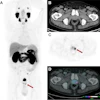
The U.S. Food and Drug Administration (FDA) has granted approval to the Feinstein Institutes for Medical Research for a new radiopharmaceutical to be used with PET to help diagnose and monitor Parkinson's disease.
The radiopharmaceutical, fluorodopa F-18, is administered intravenously and helps to visualize nerve terminals on PET scans. In patients with Parkinson's disease who experience loss of dopaminergic neurons, uptake of fluorodopa will be reduced, which can be visualized on PET scans.
The radiotracer can help clinicians detect damaged or lost dopaminergic nerve cells in patients with Parkinson's disease. It can also help visualize implants for patients with Parkinson's who have undergone intracerebral tissue transplantation.