Sunday, November 27 | 9:00 a.m.-10:00 a.m. | S1-SSMK01-2 | Room E451B
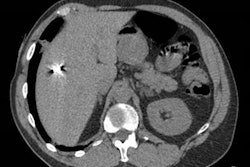
Researchers from the Mayo Clinic in Rochester, MN, will share how their deep-learning algorithm can detect multiple myeloma lesions on whole-body CT exams.Although multiple myeloma lesions can be detected on whole-body low-dose CT exams, this diagnostic task is time-consuming and requires expert radiologists, according to presenter Dr. Shahriar Faghani, a postdoctoral research fellow. To help address this critical need for lesion quantification, the research team trained and tested a deep-learning algorithm using whole-body low-dose CT exams from 26 patients.
In testing, their model achieved 88% sensitivity and 86% specificity on a lesion level. What’s more, the researchers noted that it correctly detected lesions on the bones that hadn’t been annotated and weren’t used during the algorithm’s training.
“This demonstrates that the model can detect the lesions regardless of their location,” the authors wrote.
The researchers have concluded that their deep-learning model is a consistent and fast computer-aided diagnostic tool, according to the researchers. However, it will need to be further refined and validated on external data before it will be ready for widespread adoption in clinical practice, they said.
Check out this presentation on Sunday morning for all the details.



![Images show the pectoralis muscles of a healthy male individual who never smoked (age, 66 years; height, 178 cm; body mass index [BMI, calculated as weight in kilograms divided by height in meters squared], 28.4; number of cigarette pack-years, 0; forced expiratory volume in 1 second [FEV1], 97.6% predicted; FEV1: forced vital capacity [FVC] ratio, 0.71; pectoralis muscle area [PMA], 59.4 cm2; pectoralis muscle volume [PMV], 764 cm3) and a male individual with a smoking history and chronic obstructive pulmonary disorder (COPD) (age, 66 years; height, 178 cm; BMI, 27.5; number of cigarette pack-years, 43.2, FEV1, 48% predicted; FEV1:FVC, 0.56; PMA, 35 cm2; PMV, 480.8 cm3) from the Canadian Cohort Obstructive Lung Disease (i.e., CanCOLD) study. The CT image is shown in the axial plane. The PMV is automatically extracted using the developed deep learning model and overlayed onto the lungs for visual clarity.](https://img.auntminnie.com/mindful/smg/workspaces/default/uploads/2026/03/genkin.25LqljVF0y.jpg?auto=format%2Ccompress&crop=focalpoint&fit=crop&h=100&q=70&w=100)


![Images show the pectoralis muscles of a healthy male individual who never smoked (age, 66 years; height, 178 cm; body mass index [BMI, calculated as weight in kilograms divided by height in meters squared], 28.4; number of cigarette pack-years, 0; forced expiratory volume in 1 second [FEV1], 97.6% predicted; FEV1: forced vital capacity [FVC] ratio, 0.71; pectoralis muscle area [PMA], 59.4 cm2; pectoralis muscle volume [PMV], 764 cm3) and a male individual with a smoking history and chronic obstructive pulmonary disorder (COPD) (age, 66 years; height, 178 cm; BMI, 27.5; number of cigarette pack-years, 43.2, FEV1, 48% predicted; FEV1:FVC, 0.56; PMA, 35 cm2; PMV, 480.8 cm3) from the Canadian Cohort Obstructive Lung Disease (i.e., CanCOLD) study. The CT image is shown in the axial plane. The PMV is automatically extracted using the developed deep learning model and overlayed onto the lungs for visual clarity.](https://img.auntminnie.com/mindful/smg/workspaces/default/uploads/2026/03/genkin.25LqljVF0y.jpg?auto=format%2Ccompress&crop=focalpoint&fit=crop&h=112&q=70&w=112)