Prerecorded, available throughout the meeting | SPR-CH-26
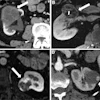
Pulmonary MRI with an ultrashort echo time matches the performance of standard- or reduced-dose CT for Lung-RADS classification on lung cancer screening, Japanese investigators have found.Researchers have studied the efficacy of lung MR imaging with ultrashort echo time for detecting nodules or classifying them compared with CT, but little has been done regarding whether MRI is comparable to CT for Lung-RADS evaluation, noted a team led by presenter Dr. Yoshiharu Ohno, PhD, of Fujita Health University School of Medicine in Toyoake.
The group conducted a study that compared pulmonary MRI with an ultrashort echo time with standard- or reduced-dose thin-section CT scans for sensitivity of detecting nodules, false-positive rate, and Lung-RADS classification in screening situations. Standard-dose chest CT scans were acquired at 270 mA and reduced-dose CT at 60 mA.
The study included 365 patients undergoing CT lung cancer screening. The group compared the performance of the three methods using kappa statistics.
The investigators found that the sensitivity of pulmonary MRI with an ultrashort echo time for detecting lung nodules was higher than standard- or reduced-dose CT (0.88. 0.87, and 0.87, respectively). There was no difference in false-positive rates among all three methods. And agreement for Lung-RAD categorization was almost perfect (MRI with ultrashort echo time was 0.81, standard dose CT was 0.82, and reduced dose CT was 0.82).