Medical 3D imaging company Coreline Soft has received approval from the South Korea Ministry of Food and Drug Safety for its computer-aided detection (CAD) software that helps screen for cancerous lung nodules.
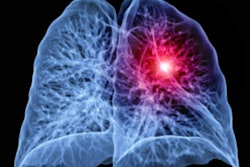
The Aview Lung Nodule CAD software uses artificial intelligence to identify pulmonary nodules on CT scans. The CAD solution is designed to work with the company's Aview product line, which includes the Aview LCS lung cancer screening software.
In a clinical trial, Coreline's CAD solution achieved a 97% nodule detection rate, according to the company. The vendor is preparing to submit its CAD solution for approval in the U.S. and European Union.
Coreline also announced that Aview was selected for the fourth year as the software solution for South Korea's National Lung Screening Trial, a multisociety effort exploring the feasibility of population-based lung cancer screening. The company will also provide solutions for a large-scale lung cancer screening trial taking place in six European countries.