Monday, December 2 | 10:30 a.m.-10:40 a.m. | SSC08-01 | Room E450A
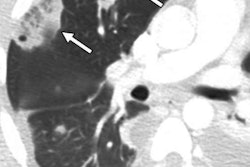
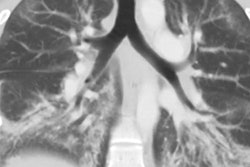
In this talk, researchers will share details about a deep-learning algorithm for detecting, tagging, and segmenting various lesions on CT images.Presenter Ke Yan, PhD, from the U.S. National Institutes of Health (NIH) said he developed the multitask universal lesion analysis network (MULAN) to help radiologists save time and improve their accuracy. MULAN can help radiologists find, describe, and delineate a variety of lesions on CT, he said.
"This is the first algorithm that can do the three tasks jointly on many lesion types, thanks to the DeepLesion dataset our lab released last year," Yan told AuntMinnie.com. "It proves that computers have the capacity to remember the appearance of a lot of lesions, given sufficient training data."
After training, the algorithm yielded 84.8% detection sensitivity at a rate of one false positive per image, as well as an area under the curve of 0.96 for lesion tagging. The mean absolute error for the lesions' Response Evaluation Criteria in Solid Tumors (RECIST) diameters, calculated from the segmentation results, was 1.97 ± 2.24 mm.
Learn all about MULAN by sitting in on this Monday talk.