Tuesday, November 27 | 10:40 a.m.-10:50 a.m. | SSG02-02 | Room S104B
In this talk, researchers will report that machine learning performs better than the Coronary Artery Disease Reporting and Data System (CAD-RADS) for predicting death and coronary events on coronary CT angiography (CCTA).Existing methods of computing a risk score from CCTA rely on multilinear regression analysis, which might or might not be optimal, according to Dr. Kevin Johnson of Yale University School of Medicine in New Haven, CT.
"Also, existing methods sometimes predesignate features as important, whereas machine learning can sometimes recognize those features without them being predesignated," he said. "An example is that disease in proximal segments increases risk, as opposed to disease in distal segments."
The researchers collected data on risk factors from CCTA studies and scored arteries using CAD-RADS and four other risk-assessment methods. They compared those results with prognostic scores derived from machine-learning algorithms that analyzed the same risk-factor data.
Machine learning predicted death and coronary events more accurately than CAD-RADS, according to the researchers.
"Risk estimation might be improved by using a more flexible method to combine image features into a score," Johnson told AuntMinnie.com.
Get all the details by sitting on this Tuesday morning presentation.

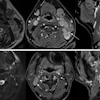



![Images show the pectoralis muscles of a healthy male individual who never smoked (age, 66 years; height, 178 cm; body mass index [BMI, calculated as weight in kilograms divided by height in meters squared], 28.4; number of cigarette pack-years, 0; forced expiratory volume in 1 second [FEV1], 97.6% predicted; FEV1: forced vital capacity [FVC] ratio, 0.71; pectoralis muscle area [PMA], 59.4 cm2; pectoralis muscle volume [PMV], 764 cm3) and a male individual with a smoking history and chronic obstructive pulmonary disorder (COPD) (age, 66 years; height, 178 cm; BMI, 27.5; number of cigarette pack-years, 43.2, FEV1, 48% predicted; FEV1:FVC, 0.56; PMA, 35 cm2; PMV, 480.8 cm3) from the Canadian Cohort Obstructive Lung Disease (i.e., CanCOLD) study. The CT image is shown in the axial plane. The PMV is automatically extracted using the developed deep learning model and overlayed onto the lungs for visual clarity.](https://img.auntminnie.com/mindful/smg/workspaces/default/uploads/2026/03/genkin.25LqljVF0y.jpg?auto=format%2Ccompress&crop=focalpoint&fit=crop&h=100&q=70&w=100)


![Images show the pectoralis muscles of a healthy male individual who never smoked (age, 66 years; height, 178 cm; body mass index [BMI, calculated as weight in kilograms divided by height in meters squared], 28.4; number of cigarette pack-years, 0; forced expiratory volume in 1 second [FEV1], 97.6% predicted; FEV1: forced vital capacity [FVC] ratio, 0.71; pectoralis muscle area [PMA], 59.4 cm2; pectoralis muscle volume [PMV], 764 cm3) and a male individual with a smoking history and chronic obstructive pulmonary disorder (COPD) (age, 66 years; height, 178 cm; BMI, 27.5; number of cigarette pack-years, 43.2, FEV1, 48% predicted; FEV1:FVC, 0.56; PMA, 35 cm2; PMV, 480.8 cm3) from the Canadian Cohort Obstructive Lung Disease (i.e., CanCOLD) study. The CT image is shown in the axial plane. The PMV is automatically extracted using the developed deep learning model and overlayed onto the lungs for visual clarity.](https://img.auntminnie.com/mindful/smg/workspaces/default/uploads/2026/03/genkin.25LqljVF0y.jpg?auto=format%2Ccompress&crop=focalpoint&fit=crop&h=112&q=70&w=112)