University of California, Davis (UC Davis) has signed a licensing agreement for Isotropic Imaging to commercialize a novel CT scanner designed for breast cancer detection.
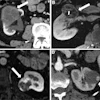
The breast CT scanner produces highly detailed 3D images of the human breast for a less obstructed view of potential lesions than those visualized on 2D mammograms, according to the university.
With financial support from the U.S. National Institutes of Health, UC Davis researchers have developed four CT scanners that have imaged more than 600 women at UC Davis Medical Center and one other institution as part of a clinical trial.
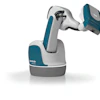
The CT scanner is configured for a patient to lay face down on a padded table and place the breast in a circular opening. The scanner generates 300 to 500 images of the breast around 360° to create a 3D digital model. The imaging procedure takes approximately 10 seconds and delivers a radiation dose equivalent to that of standard two-view mammography.
Isotropic Imaging's license includes the rights to patents covering novel methods of breast cancer imaging and diagnosis, including an algorithm designed to compensate for imaging differences throughout the breast tissue. The company is currently exploring options for fast-track applications with regulatory authorities in the U.S. and elsewhere.