Dear AuntMinnie Member,
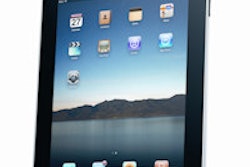
Is an iPad a viable tool for remote interpretation of coronary CT angiography (CCTA) studies? Perhaps so, according to a new study by researchers from Johns Hopkins University.
The Hopkins team compared CCTA interpretations made by experienced readers using either a traditional clinical 3D workstation or an iPad. In particular, they wondered if the small size of the coronary arteries might make iPad interpretations difficult. However, they found 100% agreement between the two interpretation techniques.
The study could have important implications for after-hours interpretations in environments such as the emergency setting by enabling imaging specialists to provide reads without having to be physically present. Get the rest of the details by clicking here, or visit our Imaging Informatics Community at informatics.auntminnie.com.
Mammi-PET for breast lesions
Meanwhile, in the realm of molecular breast imaging, we bring you a new study on a novel dedicated PET mammography system, called Mammi-PET.
The unit was developed by a Spanish company with the goal of providing an adjunctive imaging modality that brings the power of PET to breast imaging. European researchers wanted to see how well the system performed by comparing it with whole-body PET/CT for detecting breast lesions.
They found that the system performed better than PET/CT for detecting lesions smaller than 1 cm. But it had one important drawback that researchers believe needs to be addressed. Learn what it is by clicking here, or visit our Molecular Imaging Community at molecular.auntminnie.com.
Mammo false positives
Finally, a team from the University of Colorado found that going through the experience of a false-positive mammogram doesn't necessarily deter women from undergoing breast screening in the future. The findings could affect the debate over breast screening, as false positives are frequently cited by mammography's critics as one of the "harms" of screening. Get the rest of the story by clicking here, or visit our Women's Imaging Community at women.auntminnie.com.