The American Society of Radiologic Technologists (ASRT) announced it has launched a new course, called CT Basics: Radiation Therapy Series.
The series, made up of six modules, provides radiation therapists with an overview of the basics of CT as it relates to radiation therapy practice. The series covers a range of topics including the fundamentals of CT, its use in simulation for radiation therapy, equipment protocols, image processing, and patient safety and image quality.
The series is the newest addition to ASRT's complete CT Basics package, a 10-module educational series launched in 2010 to help CT technologists prepare for a career in the CT specialty area, the society said.

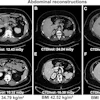


![Images show the pectoralis muscles of a healthy male individual who never smoked (age, 66 years; height, 178 cm; body mass index [BMI, calculated as weight in kilograms divided by height in meters squared], 28.4; number of cigarette pack-years, 0; forced expiratory volume in 1 second [FEV1], 97.6% predicted; FEV1: forced vital capacity [FVC] ratio, 0.71; pectoralis muscle area [PMA], 59.4 cm2; pectoralis muscle volume [PMV], 764 cm3) and a male individual with a smoking history and chronic obstructive pulmonary disorder (COPD) (age, 66 years; height, 178 cm; BMI, 27.5; number of cigarette pack-years, 43.2, FEV1, 48% predicted; FEV1:FVC, 0.56; PMA, 35 cm2; PMV, 480.8 cm3) from the Canadian Cohort Obstructive Lung Disease (i.e., CanCOLD) study. The CT image is shown in the axial plane. The PMV is automatically extracted using the developed deep learning model and overlayed onto the lungs for visual clarity.](https://img.auntminnie.com/mindful/smg/workspaces/default/uploads/2026/03/genkin.25LqljVF0y.jpg?auto=format%2Ccompress&crop=focalpoint&fit=crop&h=112&q=70&w=112)