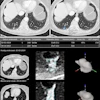
Virtual colonoscopy (also known as CT colonography or CTC) is a useful colon screening exam in minority communities, particularly among individuals who might shy away from conventional colonoscopy, according to a poster study unveiled this week at the Digestive Disease Week (DDW) meeting in New Orleans.
Minorities in the U.S. have lower colorectal cancer screening rates than the population as a whole, according to researchers from State University New York (SUNY) Downstate Medical Center in Brooklyn. In cooperation with Ohio's Cleveland Clinic, they examined 295 consecutive screening patients using CTC at two teaching hospitals in Brooklyn.
Patient data were analyzed for patient demographics, reason for referral, and polyp detection rate for CT colonography. Of the 295 patients, 258 (87.5%) were African-American, 21 (7.1%) were Hispanic, two (0.7%) were Caucasian, and 14 (4.7%) were from another group. Virtual colonoscopy results were examined using McNemar's test.
Most patients (n = 189, 64.1%) were originally referred for optical colonoscopy, and 47 (15.9%) refused it. Seventeen (5.8%) of the patients presented with gastrointestinal bleeding, 14 (4.7%) for primary colorectal cancer screening, and 28 (9.5%) for other indications, the authors wrote in an abstract accompanying the poster.
No adverse events were reported at CTC, which detected 46 lesions in 39 patients, including 11 masses and 35 polyps -- three smaller than 5 mm (8.6%), 17 measuring 6-9 mm (48.6%), and 15 measuring ≥ 10 mm (42.8%).
"CTC is a useful and accurate modality to detect polyps and cancers in minority patients," the authors concluded, adding that many of the lesions were found in the right colon and represent advanced adenomas or cancer, in accordance with the literature. "Given the racial disparities and barriers for colorectal cancer screening, CTC may be a useful tool in screening African-American and minority patients in the future," they wrote.
Related Reading
Hispanics have less access to colon screening, April 12, 2010
Colorectal cancer attitudes vary by ethnicity, August 26, 2009
Most primary care doctors discuss only some colon cancer screening methods, July 20, 2009
Ethnic background influences mammography compliance, November 5, 2008
Colorectal cancer survival differs by race and ethnicity, November 30, 2007
Copyright © 2010 AuntMinnie.com