Philips is planning to highlight a new version 3.0 software upgrade for its flagship Mx8000 IDT multislice CT scanner. The new software offers improved ease of use, increased performance, new clinical applications, and faster slice reconstructions, as well as additional slice modes, according to the Andover, MA, company.
Acquisition is now possible in four different modes: 2 x 0.6 mm, 1 x 1.2 mm, 4 x 4.5 mm, and 2 x 9 mm. The 2 x 0.6-mm mode provides high-resolution imaging for applications such as imaging of the brain or internal auditory canal, or for orthopedic applications. Meanwhile, the 1 x 1.2-mm mode is well-suited for pulmonary exams, according to the company.

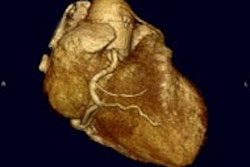
Philips is also introducing a new version 5.2 software upgrade for its MxView workstation. The software includes improved ease of use, new clinical applications, performance improvements, and enhancements to the company’s cardiac CT application.
MxView is a dual-processor, dual-monitor workstation with more than 400 GB of available image storage. The workstation features a slab-viewing mode and FadeMIP, the company’s protocol for maximum intensity projections. Mx8000 also supports ViewForum, Philips’ information technology platform, which enables users to view images on any modality or PACS workstation.
The MxView works-in-progress to be highlighted include an advanced brain perfusion/stroke assessment package, lung scan CAD, and advanced vascular analysis. The 5.2 upgrade will be available on new scanners as of January 1, 2004, and to the company’s installed base in March or April.