CHICAGO - A comparison study at Massachusetts General Hospital favored diffusion-weighted MRI (DWI-MRI) over computed tomography and MRI without DWI for the detection of early acute stroke.
Dr. Mark Mullins, who presented the study at the RSNA meeting Dec. 2, and his coauthors reviewed the medical records of 733 patients admitted to the emergency room with diagnoses of hyperacute or acute stroke.
A CT exam was performed on 563 patients within six hours of presentation. The sensitivity was 39% and the specificity was 89%. The 134 patients who underwent DWI-MRI within six hours had a sensitivity rate of 92% and a specificity of 86%. Finally, 16 patients had MRI without DWI, with 58% sensitivity and 100% specificity.
In many cases, DWI-MRI was able to detect areas in the brain stem and the deep gray matter that are typical blind spots, Mullins said.
Mullins said the next phase of the study will look at the costs of incorporating MRI into acute stroke protocol. In addition, because the study was done two years ago, newer imaging approaches will now be studied, including perfusion imaging and narrow-window CT.
By Shalmali PalAuntMinnie.com staff writer
December 3, 1999


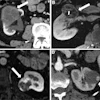
![Images show the pectoralis muscles of a healthy male individual who never smoked (age, 66 years; height, 178 cm; body mass index [BMI, calculated as weight in kilograms divided by height in meters squared], 28.4; number of cigarette pack-years, 0; forced expiratory volume in 1 second [FEV1], 97.6% predicted; FEV1: forced vital capacity [FVC] ratio, 0.71; pectoralis muscle area [PMA], 59.4 cm2; pectoralis muscle volume [PMV], 764 cm3) and a male individual with a smoking history and chronic obstructive pulmonary disorder (COPD) (age, 66 years; height, 178 cm; BMI, 27.5; number of cigarette pack-years, 43.2, FEV1, 48% predicted; FEV1:FVC, 0.56; PMA, 35 cm2; PMV, 480.8 cm3) from the Canadian Cohort Obstructive Lung Disease (i.e., CanCOLD) study. The CT image is shown in the axial plane. The PMV is automatically extracted using the developed deep learning model and overlayed onto the lungs for visual clarity.](https://img.auntminnie.com/mindful/smg/workspaces/default/uploads/2026/03/genkin.25LqljVF0y.jpg?auto=format%2Ccompress&crop=focalpoint&fit=crop&h=100&q=70&w=100)


![Images show the pectoralis muscles of a healthy male individual who never smoked (age, 66 years; height, 178 cm; body mass index [BMI, calculated as weight in kilograms divided by height in meters squared], 28.4; number of cigarette pack-years, 0; forced expiratory volume in 1 second [FEV1], 97.6% predicted; FEV1: forced vital capacity [FVC] ratio, 0.71; pectoralis muscle area [PMA], 59.4 cm2; pectoralis muscle volume [PMV], 764 cm3) and a male individual with a smoking history and chronic obstructive pulmonary disorder (COPD) (age, 66 years; height, 178 cm; BMI, 27.5; number of cigarette pack-years, 43.2, FEV1, 48% predicted; FEV1:FVC, 0.56; PMA, 35 cm2; PMV, 480.8 cm3) from the Canadian Cohort Obstructive Lung Disease (i.e., CanCOLD) study. The CT image is shown in the axial plane. The PMV is automatically extracted using the developed deep learning model and overlayed onto the lungs for visual clarity.](https://img.auntminnie.com/mindful/smg/workspaces/default/uploads/2026/03/genkin.25LqljVF0y.jpg?auto=format%2Ccompress&crop=focalpoint&fit=crop&h=112&q=70&w=112)


