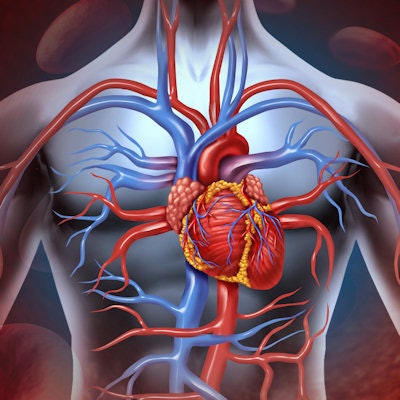
Interventional radiologists reported a decline in rates of heart attack patients seeking care during the COVID-19 pandemic, a sign that many patients may have stayed at home despite experiencing symptoms of a heart attack, according to researchers.
In a study presented at the Society for Cardiovascular Angiography and Interventions (SCAI) 2021 virtual meeting, researchers reported a 70% decline in the number of patients presenting with acute myocardial infarction (AMI) during April 2020 compared with April 2019. In addition, while the number of patients with AMI seeking care at hospitals dropped during the pandemic, those who did receive care experienced more severe symptoms because of delays in patients seeking emergency services.
The findings point to the need for improved public health messaging for future health crises so that people do not remain at home out of fear, the researchers concluded.






![Images show the pectoralis muscles of a healthy male individual who never smoked (age, 66 years; height, 178 cm; body mass index [BMI, calculated as weight in kilograms divided by height in meters squared], 28.4; number of cigarette pack-years, 0; forced expiratory volume in 1 second [FEV1], 97.6% predicted; FEV1: forced vital capacity [FVC] ratio, 0.71; pectoralis muscle area [PMA], 59.4 cm2; pectoralis muscle volume [PMV], 764 cm3) and a male individual with a smoking history and chronic obstructive pulmonary disorder (COPD) (age, 66 years; height, 178 cm; BMI, 27.5; number of cigarette pack-years, 43.2, FEV1, 48% predicted; FEV1:FVC, 0.56; PMA, 35 cm2; PMV, 480.8 cm3) from the Canadian Cohort Obstructive Lung Disease (i.e., CanCOLD) study. The CT image is shown in the axial plane. The PMV is automatically extracted using the developed deep learning model and overlayed onto the lungs for visual clarity.](https://img.auntminnie.com/mindful/smg/workspaces/default/uploads/2026/03/genkin.25LqljVF0y.jpg?auto=format%2Ccompress&crop=focalpoint&fit=crop&h=112&q=70&w=112)


