The Sheikh Khalifa Specialty Hospital, in which I have been working since its opening in December 2014, was initiated by the president of the United Arab Emirates (UAE), his highness Sheikh Khalifa Bin Zayed Al Nahyan, and is operated by the Seoul National University Hospital in Korea. My role for the hospital was to set up the radiology department to an international level and to advise hospital managers.
Compared with other Middle Eastern countries, UAE has a more open and cosmopolitan atmosphere and culture, in my feeling. UAE is one of the most rapidly growing regions in terms of both natural population growth and the increase in migration from other countries to meet the needs resulting from the rapid economic development. The 2014 population of the UAE stood at around 9.5 million, 15% to 20% being Emiratis and the rest being expatriates.
 Staff in the radiology department consists of five consultant radiologists, 21 radiographers, four nurses, and two assistants. All images courtesy of Dr. Jung-Gi Im, PhD.
According to the World Health Organization (WHO), the Eastern Mediterranean region has the fastest growth rate for cardiovascular disease, while the UAE has one of the world's highest age-standardized death rates for cardiovascular disease. The top three causes of death in UAE are cardiovascular disease, injury (most commonly road traffic accidents), and cancer, in order of frequency.
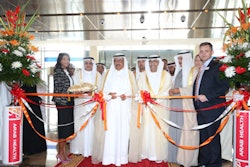
The Sheikh Khalifa Specialty Hospital is a 246-bed tertiary referral hospital specializing in cardiology, oncology, and neurology/neurosurgery. The total number of employees is around 800, among which 160 employees are from the Seoul National University Hospital. Among the employees are Koreans (259), Filipinos (195), Emiratis (83), and Jordanians (80), and they come from 30 countries in total.
Because of the staff's multinational profile, communication, cooperation, and harmonization are of the utmost importance. During the past year, there have been continued efforts on learning about, and familiarization with, different cultures and languages, and now the hospital is operating without any difficulties. Typically, communication with younger patients is done in English, while for older patients communication in Arabic with the aid of an interpreter is needed occasionally.
 Dr. Jung-Gi Im, PhD, was an honorary member of RSNA 2015.
The first surgical procedure was a coronary artery bypass graft in January 2014, which was very successful. As an academic hospital, activities are growing fast, and there is an interdepartmental imaging conference twice a week, as well as lectures or symposia on various topics at least once a week.
In the UAE, most of the top-class hospitals belong to the government or its related organizations entrusted to global top-brand hospitals: the Tawam Hospital in Al Ain is affiliated with Johns Hopkins Hospital, while the Cleveland Clinic in Abu Dhabi is affiliated with the Cleveland Clinic. The Sheikh Khalifa Specialty Hospital is different in that 20% of the total employees are from the Seoul National University Hospital, thus aiming to implant its systems and spirit.
Of the 157 medical schools in the Middle East (excluding Turkey), five are in the UAE, one of which is public and four are private. Emirati graduates of medical schools in the UAE can apply for a government-funded scholarship to pursue their internship and residency training abroad. Male Emirati graduates, who consist of 25% or less of total graduates, tend to prefer to go abroad for their training. Some of the female graduates prefer to conduct their training inside UAE for cultural reasons.
Regarding the residency training system in Gulf Corporation Country states, each country has adopted the so-called Arab Board Authentication system, and each hospital is authorized for residency training for each specialty of medical practice. Hospitals authenticated for radiology residency training are available in UAE as part of the Arab Board program.
As for the internship training, authentication is decided upon by the UAE Ministry of Health. The Sheikh Khalifa Specialty Hospital is now authorized for training, beginning from September 2016.
 The Sheikh Khalifa Specialty Hospital is a 246-bed tertiary referral hospital specializing in cardiology, oncology, and neurology/neurosurgery.
The Emirates Radiology Society is one of the 40 scientific societies under the umbrella of the Emirates Medical Association. Even though the board of directors of the Emirates Radiology Society is designated, there is no notable annual convention of the society. Radiology-related scientific programs in various international conventions held in the UAE, for example the Arab Health Convention, are designated to specific radiologists by the organizing committee. Most of the radiologists' educational and academic activities, such as lectures and symposia, are held on a hospital-by-hospital basis.
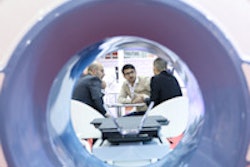
Members of the department of radiology in Sheikh Khalifa Specialty Hospital consist of five consultant radiologists, 21 radiographers, four nurses, and two assistants. Up-to-date angiography, CT, MRI, and ultrasound suites are working. Because of the high medical severity index of the inpatients, the number of interventional radiology procedures is notably high. In some of the cases, teleradiology consultation to the Seoul National University Hospital is performed.
Like the remarkable growth and development of the economy during the last two decades, the quality of medical care in UAE has drastically improved and will continue to get better due to the well-planned strategy of the government.
Dr. Jung-Gi Im, PhD, is a consultant in the department of radiology at Sheikh Khalifa Specialty Hospital in Ras Al Khaimah, near Sharjah, United Arab Emirates (UAE), and professor emeritus at Seoul National University College of Medicine in Korea. He became an honorary member of RSNA last month.
The comments and observations expressed herein do not necessarily reflect the opinions of AuntMinnie.com or AuntMinnieEurope.com, nor should they be construed as an endorsement or admonishment of any particular vendor, analyst, industry consultant, or consulting group.