LOS ANGELES -- An alpha-emitting radiotracer produced remission in patients with advanced neuroendocrine tumors who had exhausted typical treatment options, according to research from the Society of Nuclear Medicine and Molecular Imaging (SNMMI) meeting.
"It can be very challenging to treat these patients as they have already received many different types of therapies," said lead researcher Elisabetta Perrone, MD, of Policlinico Universitario Agostino Gemelli IRCCS in Rome, in a statement released by the society. "Since alpha particles deliver high-energy radiation over a very short distance, [they] may help target tumor cells while limiting unnecessary exposure to close healthy tissues, therefore balancing efficacy and toxicity -- an important consideration for patients undergoing systemic therapies."
Metastatic, well-differentiated neuroendocrine neoplasms (NEN) Grade 3 that progress after standard therapies -- including peptide receptor radionuclide therapy (PRRT) with β-emitting somatostatin receptor (SSTR) agonists (Lu-177 DOTATATE) and chemotherapy -- have poor prognosis and "remain a major therapeutic unmet need," Perrone and colleagues explained. SSTR antagonists show promise as radiotheranostic compounds that achieve higher tumor uptake, tumor-to-background ratios, and prolonged tumor retention compared to agonists, and α-therapy may overcome limitations of PRRT with β-emitters due to favorable physical properties of α-particles, they wrote.
The investigators conducted a study that assessed safety, molecular imaging response, follow-up duration, and survival outcomes after α-PRRT with the actinium-225 (Ac-225)-labeled SSTR antagonist DOTA-LM3, administered alone or along with lutetium-177 (Lu-177). The study included 20 "heavily pretreated" patients with primary tumors in the pancreas (n = 15), small bowel (n = 3), colorectum (n = 1) or unknown (n = 1); of these, six had well-differentiated NEN Grade 3 at diagnosis and 14 were upgraded to well-differentiated NEN G3 after repeated biopsy; median Ki-67 was 34%.
Among the 20 patients, 41 α-PRRT cycles were administered (nine as monotherapy, 32 in tandem). Seven patients received one cycle, seven received two cycles, four received three cycles, and two received four cycles.
The group noted that treatment was "generally well tolerated" with only Grade 1 events (nausea, n = 8). But it did report some long-term toxicities, including the following:
- Grade 2 (n = 4) and Grade 3 anemia (n = 1),
- Grade 1 and 2 (n = 3) and Grade 3 leukocytopenia (n = 1),
- Grade 3 absolute neutrophil count reduction (n = 1; this resolved within a few weeks),
- Grade 1 and 2 (n = 3) and G3 thrombocytopenia (n = 2),
- Grade 1 creatinine increase (n = 2),
- Grade 2 (n = 2) and Grade 3 (n = 1) liver impairment in patients with hepatic metastases.
After the treatment course, molecular imaging showed complete remission in one patient, partial remission in 10, stable disease in two patients, and progressive disease in six. One individual experienced clinical progression and died before post-PRRT imaging. At the time of the researchers' analysis, 11 patients were alive (median follow-up, seven months) and nine had died (median survival 18 months).
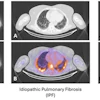
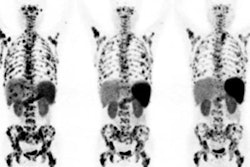
 An example of partial response. 58-year-old patient with neuroendocrine neoplasm of the pancreas with hepatic and bone metastases. Previously treated with chemotherapy, hemithyroidectomy, PRRT with 177Lu-DOTATATE, Lanreotide, Everolimus, trans-arterial chemo-embolization of liver metastases. After two cycles of tandem DOTA-LM3 PRRT, she achieved partial remission of disease (reduced hepatic and bone metastases). PRRT resulted in improved quality of life, including reduced abdominal pain and enhanced physical activity. Delayed side effects include anemia G2 and reduced platelets count G3. A) 68Ga-DOTA-LM3 PET/CT scan pre-PRRT in July 2023. B) 68Ga-DOTA-LM3 PET/CT scan post-PRRT (1x tandem DOTA-LM3 PRRT with 225AC and 177Lu) in September 2023. C) PET/CT images (from left to right) pre-PRRT in July 2023, post-first cycle of tandem PRRT in September 2023, and post-second cycle of tandem PRRT (November 2023). The images show the reduced uptake and dimension of the tumoral lesions.Elisabetta Perrone, MD, and SNMMI
"This cohort of patients was heterogeneous with respect to primary tumor site, prior treatments and number of alpha-PRRT cycles; nevertheless, [the therapy] showed a manageable acute and long-term safety profile and encouraging antitumor activity, follow-up, and survival outcomes," Perrone concluded.
Check out AuntMinnie’s full coverage of SNMMI 2026 on our ShowCast.