CAPE TOWN – Cardiac MRI is a valuable tool for assessing cardiovascular disease (CVD) risk in people with HIV, according to a talk delivered May 12 at the ISMRM meeting.
As treatment for HIV has improved, those with the disease are living longer -- and thus may develop other diseases as they age, including CVD, said presenter Allison Hays, MD, of Johns Hopkins University in Baltimore.
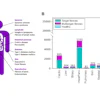
"[Among those people with HIV], non-AIDS related deaths account for 50.5%, and 16% are due to CVD," she told session attendees, citing data that came from a study of 13 HIV cohorts from around the world.
 Allison Hays, MDAuntMinnie.com
Underlying factors that contribute to CVD in those with HIV include co-infections such as COVID-19); comorbidities such as hypertension, obesity, diabetes, lung disease; and HIV-related elements such as immune depletion, copathogens, and the effects of antiretroviral therapy. These factors can lead to systemic inflammation and structural changes in the heart in people with HIV, and thus to coronary artery disease, heart failure, arrythmia, hypertension/vascular disease, and pulmonary hypertension, she said.
Hays described what has changed in HIV research in the past decade, including new and more widespread antiretroviral and cholesterol treatments, and in the U.S., funded HIV cohort studies. She cited a study published in the European Heart Journal of Cardiovascular Imaging for which researchers used cardiac MRI to assess heart disease risk in people with HIV and reported that seropositivity for the disease was associated with "greater diffuse non-ischemic fibrosis and larger left atrial volume but no other differences" -- findings that were independent of HIV disease severity or ART regimen.
"[These results suggest] persistent subclinical myocardial changes despite viral suppression," Hays noted.
She also referred to a study published in JACC: Cardiovascular Imaging that found that a T1 MRI protocol was independently predictive of adverse cardiovascular events in people with HIV, while traditional cardiovascular disease scores were not.
Those with HIV often manifest "widespread coronary endothelial dysfunction," Hays said, noting that this condition is also a predictor of cardiovascular events and can be measured using stress cardiac MRI.
"Coronary endothelial function is impaired in HIV even in the absence of CVD diagnosis or symptoms," she explained.
Cardiac MRI has a key role to play in diagnosing CVD in those with HIV and monitoring treatment, according to Hays.
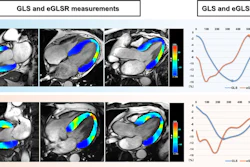
"[Cardiac MRI] quantifies subclinical organ injury and guides early clinical intervention," she said, noting that the technique offers a number of ways to assess response to cardiovascular disease treatment, including late gadolinium enhancement, T2 weighted/T2 mapping, T1/extracellular volume mapping, and Left Ventricular Ejection Fraction (LVEF)/strain.
 Slide courtesy of Allison Hays, MD
The takeaway? MRI research has made "impactful contributions to better understanding HIV-related CVD," and "use of cardiac MRI in clinical trials for HIV is promising," Hays concluded.
Check out AuntMinnie's full coverage of ISMRM 2026 on our ShowCast.