Visceral fat volume measured by whole-body MRI is independently associated with prostate enlargement in men, according to research to be highlighted May 11 at the ISMRM meeting in Cape Town, South Africa.
In a cross-sectional analysis of 10,239 men, each 1,000-mL increase in visceral fat volume was associated with higher adjusted odds of prostate enlargement, noted contributing study author Sam Hashemi, vice president of AI at private radiology firm Prenuvo, and colleagues.
“Evaluating visceral adiposity and prostate morphology in otherwise healthy men during routine preventive health screening encounters provides an opportunity to identify early structural or metabolic changes that may precede [lower urinary tract symptoms] onset,” the group wrote.
Prostate enlargement is common in aging men and has been linked to obesity in prior research, but those studies relied on BMI -- a measure that can remain normal despite substantial visceral fat accumulation, the researchers explained. Whole-body MRI combined with AI-based fat segmentation can quantify visceral fat more accurately, they noted.
In the study, the group analyzed data from 10,239 men (mean age was 48.9 years and mean BMI was 28.6 kg/m²) who underwent whole-body MRI at Prenuvo clinics in North America between January 2020 and September 2025. Prostate volume was extracted from radiology reports, with enlargement defined as greater than 30 mL. Visceral adipose tissue volume was quantified using an automated MRI-based segmentation algorithm.
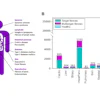
 Single slice example image from coronal T1-weighted whole body MRI with color-overlay on intra-abdominal visceral fat from automated AI-segmentation.Sam Hashemi and ISMRM
Further, the group found that the relationship varied by ethnicity. The interaction between ethnicity and visceral fat was significant only among Asian men (interaction OR 0.79, p = 0.0017), indicating that higher visceral fat was associated with lower odds of enlargement relative to white men, the researchers reported.
"Whole-body MRI enables concurrent quantification of visceral fat and prostate volume, providing a scalable imaging framework to study metabolic influences on prostate health in asymptomatic men," the authors wrote.
While the cross-sectional findings cannot establish causality, they reveal population differences that warrant further longitudinal studies, they noted.
“This study highlights the potential of AI-enabled whole-body MRI as a noninvasive research tool for investigating early metabolic and structural changes in men’s health,” the group concluded.