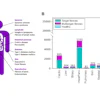
A multimodal MRI model has correlated brain imaging data linking rheumatoid arthritis (RA) and brain changes associated with depressive disorders (DD), according to a poster to be presented May 11 at the ISMRM meeting in Cape Town, South Africa.
The study of RA patients explored the connections between brain function, depressive symptom severity, and clinical indicators of RA, where neuroimaging data has previously fallen short, wrote a group led by Yuling Wang, PhD, of the Suzhou High-tech Zone People’s Hospital in Suzhou, China.
"To date, brain function research on RA patients with DD is limited," the group wrote. "This research contributes to early diagnosis and prognosis assessment of depressive disorders in rheumatoid arthritis patients by clarifying neural mechanisms, providing imaging-based evidence for clinical decision-making and future intervention studies."
To bridge the gaps, Wang and colleagues integrated imaging data obtained from 3D-T1 weighted imaging (T1WI), arterial spin labeling (ASL), resting-state functional MRI (fMRI), and MR spectroscopy (MEGA-PRESS) measurements of glutamate and gamma-aminobutyric acid (GABA) to compare gray matter structure, cerebral blood flow, brain functional networks, and metabolism.
The study included 27 female patients with RA (with and without depressive disorders), and 15 female healthy controls. Participants underwent psychological and cognitive assessments. The model also incorporated clinical data including rheumatoid factor (RF), C-reactive protein (CRP), and erythrocyte sedimentation rate (ESR), according to the group.
Upon analysis of the MR images and measurements, Wang and colleagues found that RA patients with depressive disorders exhibit preserved gray matter volume. There were no differences in gray matter volume among the three groups, they found.
The group also found the following:
- The RA-DD group showed increased cerebral blood flow (CBF) in the bilateral putamen and decreased regional homogeneity (ReHo) in the right superior temporal gyrus and left medial superior frontal gyrus compared to the healthy control group.
- DC in the right parahippocampal gyrus was decreased in both the RA-non-DD and RA-DD groups compared to the healthy control group, while the DC in the left angular gyrus was increased in the RA-DD group compared to the RA-non-DD group.
- BC in the right hippocampus was decreased in the RA-DD group compared to the healthy control group. BC in the left middle occipital gyrus was increased in the RA-DD group compared to the RA group without depressive disorders.
- In RA patients, ReHo in the left medial superior frontal gyrus was positively correlated with the Patient Health Questionnaire-9 (PHQ-9) score and ESR; the DC in the right parahippocampal gyrus was positively correlated with CRP; and the BC in the right hippocampus was negatively correlated with the generalized anxiety disorder-7 (GAD-7) score and PHQ-9 score.
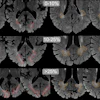
- ASL revealed increased CBF in the bilateral putamen of RA-DD patients versus controls, conflicting with some previous studies, potentially due to disease severity, clinical heterogeneity, and small sample size.
 Figure A shows a statistical parametric map highlighting brain regions with significantly different cerebral blood flow (CBF) of rheumatoid arthritis patients with depressive disorder compared to healthy controls. Figure B shows the box plot comparing the mean CBF values extracted from the significant clusters identified in Figure A.ISMRM
The work enhances understanding of the mechanisms behind depressive disorders in RA, the group said.