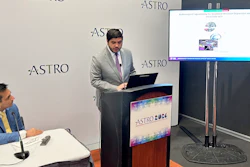
BOSTON -- Adults with cancer who received psychotherapy within four weeks of diagnosis had a 21% lower risk of dying from their cancer, according to a study presented at the American Society for Radiation Oncology (ASTRO) annual meeting.
A research team led by Edmund M. Qiao, MD, a radiation oncology resident at the University of California, San Diego, examined depression's association with cancer outcomes among 265,639 adults with six common cancers, with findings pointing to a significant and largely unaddressed gap in oncology mental health care.
“Depression can be easy to miss in cancer care because symptoms such as fatigue, difficulty concentrating and loss of interest often overlap with the effects of cancer or its treatment,” Qiao said, in a September 28 ASTRO news release.
Depression is common among people with cancer, but mental health services are not routinely integrated into oncology care, the researchers wrote. The study examined whether depression was associated with cancer mortality and whether outcomes differed by the type and timing of treatment.
The analysis included 265,639 Medicare beneficiaries aged 66 or older diagnosed from 2010 to 2017 with breast, colorectal, prostate, bladder, kidney, or non-small cell lung cancer, with 22% having major depressive disorder. Psychotherapy was identified through Medicare procedure codes and antidepressant pharmacotherapy through Part D prescription claims, evaluated at four, eight, and 12 weeks from cancer diagnosis.
According to the results, patients with depression had an 11% higher risk of cancer-specific mortality compared with those without it (five-year rates: 43% versus 35%). Psychotherapy within four weeks was associated with a 21% lower risk in adjusted analyses, with smaller reductions at eight (13%) and 12 weeks (12%).
Five-year mortality was 31% among recipients versus 44% among those who did not receive it. Only 3% of patients with depression received psychotherapy within four weeks, rising to 4.6% by 12 weeks. Antidepressant medication, used by 32.5% within four weeks, was not associated with lower cancer-specific mortality, the group reported.
“Patients who connected with psychotherapy earlier tended to have better outcomes than those who did not receive it during that period,” Qiao said
Because the analysis was retrospective, causality cannot be established, however, the researchers noted. Nonetheless, the findings suggest physicians need to think more carefully about how depression may affect different types of cancer and how they can work with patients to create individualized support plans early in their care, the group concluded.
Check out AuntMinnie's full coverage of ASTRO 2026 on our ShowCast.