Susan G. Komen is applauding members of the U.S. House Energy and Commerce Health Subcommittee for passing the Screening for Communities to Receive Early and Equitable Needed Services (SCREENS) for Cancer Act.
Approved by the U.S. Senate Committee on Health, Education, Labor, and Pensions in December 2023, the legislation awaits approval by the full U.S. Senate and House, along with President Joe Biden's signature, to become law.
The SCREENS for Cancer Act reauthorizes the National Breast and Cervical Cancer Early Detection Program that provides access to breast and cervical cancer screening, diagnostic, and treatment services for low-income, uninsured or underinsured people in the U.S. The program also provides public education, outreach, patient navigation, and care coordination to increase breast and cervical cancer screening rates and reach underserved, vulnerable populations.
Once signed into law, The SCREENS for Cancer Act will preserve access to this public health infrastructure and allow greater flexibility to program grantees. Komen said this would make way for more emphasis on implementing innovative, evidence-based interventions and aggressive outreach through media, peer educators, and patient navigators.
The bicameral, bipartisan legislation is led by Representatives Joseph Morelle (D-NY-25) and Brian Fitzpatrick (R-PA-01) as well as Senators Tammy Baldwin (D-WI), Susan Collins (R-ME), Catherine Cortez Masto (D-NV), Shelley Moore Capito (R-WV), and Amy Klobuchar (D-MN).

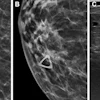
![A normal mammogram confirmed by three-year radiologic follow-up illustrates reader-marked regions of interest (ROIs) during (A) unaided (round 1) and (B) artificial intelligence (AI)–assisted (round 2) reading. Each colored dot represents an ROI for recall by a human reader. Readers could mark more than one ROI per case, represented by multiple dots of the same color. During AI-assisted reading, the AI system displayed three visible prompts: two with suspicion of malignancy scores of 35% (left mediolateral oblique [L MLO] and craniocaudal [L CC]) and one with a suspicion of malignancy score of 10% (right craniocaudal [R CC]), shown as polygonal overlays. Without AI, six of 10 readers (60%) marked a false-positive ROI. With AI assistance, this fell to two of 10 (20%). R MLO = right mediolateral oblique.](https://img.auntminnie.com/mindful/smg/workspaces/default/uploads/2026/07/2026-07-14-radiology-mammogram-ai-auto-bias.H0bYO8QlWs.jpg?auto=format%2Ccompress&fit=crop&h=100&q=70&w=100)


![A normal mammogram confirmed by three-year radiologic follow-up illustrates reader-marked regions of interest (ROIs) during (A) unaided (round 1) and (B) artificial intelligence (AI)–assisted (round 2) reading. Each colored dot represents an ROI for recall by a human reader. Readers could mark more than one ROI per case, represented by multiple dots of the same color. During AI-assisted reading, the AI system displayed three visible prompts: two with suspicion of malignancy scores of 35% (left mediolateral oblique [L MLO] and craniocaudal [L CC]) and one with a suspicion of malignancy score of 10% (right craniocaudal [R CC]), shown as polygonal overlays. Without AI, six of 10 readers (60%) marked a false-positive ROI. With AI assistance, this fell to two of 10 (20%). R MLO = right mediolateral oblique.](https://img.auntminnie.com/mindful/smg/workspaces/default/uploads/2026/07/2026-07-14-radiology-mammogram-ai-auto-bias.H0bYO8QlWs.jpg?auto=format%2Ccompress&fit=crop&h=112&q=70&w=112)