The U.S. Food and Drug Administration (FDA) issued final guidance for mammography facilities appealing decisions regarding adverse accreditation rulings and suspension of certificates, as well as patient and physician notification orders.
The FDA said that a facility that disagrees with an accrediting body's decisions that precludes certification or recertification is entitled to appeal directly to the accreditation body. If a resolution can't be reached, the facility can further appeal to the director of FDA's Division of Mammography Quality Standards (DMQS).
If a facility is further dissatisfied, it can request a formal hearing before the Departmental Appeals Board in the U.S. Department of Health and Human Services, as well as further review of the hearing officer's decision.
The FDA also said a mammography facility wanting to challenge a suspension or revocation of an FDA certificate issued under the authority of the Mammography Quality Standards Act (MQSA) can request a regulatory hearing before the FDA.
When it comes to appealing a patient and physician notification order, a facility can request supervisory review under 21 CFR 10.75.
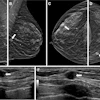
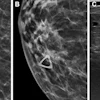
![A normal mammogram confirmed by three-year radiologic follow-up illustrates reader-marked regions of interest (ROIs) during (A) unaided (round 1) and (B) artificial intelligence (AI)–assisted (round 2) reading. Each colored dot represents an ROI for recall by a human reader. Readers could mark more than one ROI per case, represented by multiple dots of the same color. During AI-assisted reading, the AI system displayed three visible prompts: two with suspicion of malignancy scores of 35% (left mediolateral oblique [L MLO] and craniocaudal [L CC]) and one with a suspicion of malignancy score of 10% (right craniocaudal [R CC]), shown as polygonal overlays. Without AI, six of 10 readers (60%) marked a false-positive ROI. With AI assistance, this fell to two of 10 (20%). R MLO = right mediolateral oblique.](https://img.auntminnie.com/mindful/smg/workspaces/default/uploads/2026/07/2026-07-14-radiology-mammogram-ai-auto-bias.H0bYO8QlWs.jpg?auto=format%2Ccompress&fit=crop&h=100&q=70&w=100)


![A normal mammogram confirmed by three-year radiologic follow-up illustrates reader-marked regions of interest (ROIs) during (A) unaided (round 1) and (B) artificial intelligence (AI)–assisted (round 2) reading. Each colored dot represents an ROI for recall by a human reader. Readers could mark more than one ROI per case, represented by multiple dots of the same color. During AI-assisted reading, the AI system displayed three visible prompts: two with suspicion of malignancy scores of 35% (left mediolateral oblique [L MLO] and craniocaudal [L CC]) and one with a suspicion of malignancy score of 10% (right craniocaudal [R CC]), shown as polygonal overlays. Without AI, six of 10 readers (60%) marked a false-positive ROI. With AI assistance, this fell to two of 10 (20%). R MLO = right mediolateral oblique.](https://img.auntminnie.com/mindful/smg/workspaces/default/uploads/2026/07/2026-07-14-radiology-mammogram-ai-auto-bias.H0bYO8QlWs.jpg?auto=format%2Ccompress&fit=crop&h=112&q=70&w=112)