Wednesday, December 1 | 3:00 p.m.-4:00 p.m. | SSBR09-3 | Room TBA
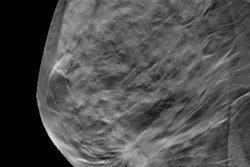
Finish your RSNA week off right with this presentation, in which researchers will discuss an artificial intelligence (AI) algorithm that detects lesions using datasets from digital breast tomosynthesis (DBT) exams.Dr. Julia Goldberg from New York University will present findings from her team's study with the AI algorithm, which analyzed over 11,000 DBT exams. All DBT exams were acquired with the Selenia Dimensions system (Hologic).
The team touted the system as ranking first in the DBTex Challenge by achieving the highest scores on the test set. The challenge was conducted earlier this year by the American Association of Physicists in Medicine, SPIE, and the U.S. National Cancer Institute.
"Our model can output the slice where the lesion is most clearly visible," the researchers said.
How did the model perform and how much sensitivity did it show? Find out more at Goldberg's presentation.







![A normal mammogram confirmed by three-year radiologic follow-up illustrates reader-marked regions of interest (ROIs) during (A) unaided (round 1) and (B) artificial intelligence (AI)–assisted (round 2) reading. Each colored dot represents an ROI for recall by a human reader. Readers could mark more than one ROI per case, represented by multiple dots of the same color. During AI-assisted reading, the AI system displayed three visible prompts: two with suspicion of malignancy scores of 35% (left mediolateral oblique [L MLO] and craniocaudal [L CC]) and one with a suspicion of malignancy score of 10% (right craniocaudal [R CC]), shown as polygonal overlays. Without AI, six of 10 readers (60%) marked a false-positive ROI. With AI assistance, this fell to two of 10 (20%). R MLO = right mediolateral oblique.](https://img.auntminnie.com/mindful/smg/workspaces/default/uploads/2026/07/2026-07-14-radiology-mammogram-ai-auto-bias.H0bYO8QlWs.jpg?auto=format%2Ccompress&fit=crop&h=112&q=70&w=112)


