The U.S. Food and Drug Administration (FDA) is warning patients who had mammograms at a radiology center in New York City on or after February 26, 2019, that there were "severe deficiencies" in the image quality of their exams.
Madison Avenue Radiology Center, located at 190th St. and Broadway, failed an annual inspection by not meeting American College of Radiology criteria for image quality, and some of the deficiencies were severe, the FDA said.
The FDA's recommendations to patients are to ask for their mammogram and medical reports from the radiology center and have them reviewed at a facility certified under the Mammography Quality Standards Act (MQSA) to decide if a repeat mammogram or more medical follow-up is needed.
On July 13, 2021, the FDA directed the facility's owner to notify all patients and their referring healthcare providers about the problems, but the facility has not performed the ordered notifications.
The FDA encouraged patients to call the National Cancer Institute's information telephone number at 1-800-422-6237 to find a MQSA-certified facility in their area.


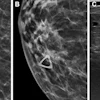
![A normal mammogram confirmed by three-year radiologic follow-up illustrates reader-marked regions of interest (ROIs) during (A) unaided (round 1) and (B) artificial intelligence (AI)–assisted (round 2) reading. Each colored dot represents an ROI for recall by a human reader. Readers could mark more than one ROI per case, represented by multiple dots of the same color. During AI-assisted reading, the AI system displayed three visible prompts: two with suspicion of malignancy scores of 35% (left mediolateral oblique [L MLO] and craniocaudal [L CC]) and one with a suspicion of malignancy score of 10% (right craniocaudal [R CC]), shown as polygonal overlays. Without AI, six of 10 readers (60%) marked a false-positive ROI. With AI assistance, this fell to two of 10 (20%). R MLO = right mediolateral oblique.](https://img.auntminnie.com/mindful/smg/workspaces/default/uploads/2026/07/2026-07-14-radiology-mammogram-ai-auto-bias.H0bYO8QlWs.jpg?auto=format%2Ccompress&fit=crop&h=100&q=70&w=100)


![A normal mammogram confirmed by three-year radiologic follow-up illustrates reader-marked regions of interest (ROIs) during (A) unaided (round 1) and (B) artificial intelligence (AI)–assisted (round 2) reading. Each colored dot represents an ROI for recall by a human reader. Readers could mark more than one ROI per case, represented by multiple dots of the same color. During AI-assisted reading, the AI system displayed three visible prompts: two with suspicion of malignancy scores of 35% (left mediolateral oblique [L MLO] and craniocaudal [L CC]) and one with a suspicion of malignancy score of 10% (right craniocaudal [R CC]), shown as polygonal overlays. Without AI, six of 10 readers (60%) marked a false-positive ROI. With AI assistance, this fell to two of 10 (20%). R MLO = right mediolateral oblique.](https://img.auntminnie.com/mindful/smg/workspaces/default/uploads/2026/07/2026-07-14-radiology-mammogram-ai-auto-bias.H0bYO8QlWs.jpg?auto=format%2Ccompress&fit=crop&h=112&q=70&w=112)