In March and April, Americans significantly reduced their use of preventive and elective healthcare even though telemedicine use increased during the COVID-19 pandemic, according to a new study published in JAMA Network Open on November 5.
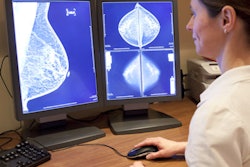
For instance, the number of mammograms and colonoscopies dropped by more than 65% during the period, and overall healthcare use fell 23% in March and 52% in April.
The researchers also noted that smaller cuts in in-person care and lower rates of telemedicine use were observed among patients who reside in lower-income or predominately nonwhite zip codes. The findings are another example of disparities in healthcare that have worsened during the pandemic, according to Christopher Whaley, PhD, a policy researcher at RAND, a nonprofit research organization.
Whalen and colleagues examined medical records from more than 5 million Americans who have private health insurance. They sifted through data from 2018 to 2020 from about 200 employers across all 50 states.
They found the following:
- Colonoscopy decreased by nearly 70%.
- Mammograms for women ages 46 to 64 dropped 67%.
- Blood sugar tests dropped by more than 50%.
- Vaccines among children under age 2 dropped by 22%.
- Angioplasty procedures dropped by nearly 17%.
- Musculoskeletal surgery, cataract surgery, and MRI scans all dropped by 45% or more.
- Asthma medications increased by 11%.
However, telemedicine visits skyrocketed, increasing by more than 4,000% in April 2020. But that increase only replaced about 40% of the decline in medical office visits.
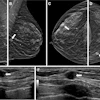

![A normal mammogram confirmed by three-year radiologic follow-up illustrates reader-marked regions of interest (ROIs) during (A) unaided (round 1) and (B) artificial intelligence (AI)–assisted (round 2) reading. Each colored dot represents an ROI for recall by a human reader. Readers could mark more than one ROI per case, represented by multiple dots of the same color. During AI-assisted reading, the AI system displayed three visible prompts: two with suspicion of malignancy scores of 35% (left mediolateral oblique [L MLO] and craniocaudal [L CC]) and one with a suspicion of malignancy score of 10% (right craniocaudal [R CC]), shown as polygonal overlays. Without AI, six of 10 readers (60%) marked a false-positive ROI. With AI assistance, this fell to two of 10 (20%). R MLO = right mediolateral oblique.](https://img.auntminnie.com/mindful/smg/workspaces/default/uploads/2026/07/2026-07-14-radiology-mammogram-ai-auto-bias.H0bYO8QlWs.jpg?auto=format%2Ccompress&fit=crop&h=100&q=70&w=100)


![A normal mammogram confirmed by three-year radiologic follow-up illustrates reader-marked regions of interest (ROIs) during (A) unaided (round 1) and (B) artificial intelligence (AI)–assisted (round 2) reading. Each colored dot represents an ROI for recall by a human reader. Readers could mark more than one ROI per case, represented by multiple dots of the same color. During AI-assisted reading, the AI system displayed three visible prompts: two with suspicion of malignancy scores of 35% (left mediolateral oblique [L MLO] and craniocaudal [L CC]) and one with a suspicion of malignancy score of 10% (right craniocaudal [R CC]), shown as polygonal overlays. Without AI, six of 10 readers (60%) marked a false-positive ROI. With AI assistance, this fell to two of 10 (20%). R MLO = right mediolateral oblique.](https://img.auntminnie.com/mindful/smg/workspaces/default/uploads/2026/07/2026-07-14-radiology-mammogram-ai-auto-bias.H0bYO8QlWs.jpg?auto=format%2Ccompress&fit=crop&h=112&q=70&w=112)