Disposable products developer Merit Medical Systems reported financial results for the second quarter that saw the company's revenues fall 14.5%, with the company swinging to a net loss of $19.1 million.
For the period (end-June 30), Merit Medical posted revenue of $218.4 million, a 14.5% decline compared with sales of $255.5 million in the corresponding quarter of 2019. The company said the decline was due to the suspension of elective medical procedures by many of the company's customers in response to the COVID-19 pandemic.
Merit swung to a net loss under generally accepted accounting principles (GAAP) for the period of $19.1 million, compared with net income of $6.9 million in the second quarter of 2019.
Merit responded to the COVID-19 crisis by reducing headcount, implementing targeted furloughs, and reducing salaries for a number of employees, including all executive positions. The company has also reduced the number of R&D projects underway to focus on those of the highest priority in order to reach Merit's financial and competitive objectives, according to Chairman and CEO Fred Lampropoulos.
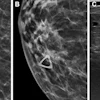


![A normal mammogram confirmed by three-year radiologic follow-up illustrates reader-marked regions of interest (ROIs) during (A) unaided (round 1) and (B) artificial intelligence (AI)–assisted (round 2) reading. Each colored dot represents an ROI for recall by a human reader. Readers could mark more than one ROI per case, represented by multiple dots of the same color. During AI-assisted reading, the AI system displayed three visible prompts: two with suspicion of malignancy scores of 35% (left mediolateral oblique [L MLO] and craniocaudal [L CC]) and one with a suspicion of malignancy score of 10% (right craniocaudal [R CC]), shown as polygonal overlays. Without AI, six of 10 readers (60%) marked a false-positive ROI. With AI assistance, this fell to two of 10 (20%). R MLO = right mediolateral oblique.](https://img.auntminnie.com/mindful/smg/workspaces/default/uploads/2026/07/2026-07-14-radiology-mammogram-ai-auto-bias.H0bYO8QlWs.jpg?auto=format%2Ccompress&fit=crop&h=100&q=70&w=100)


![A normal mammogram confirmed by three-year radiologic follow-up illustrates reader-marked regions of interest (ROIs) during (A) unaided (round 1) and (B) artificial intelligence (AI)–assisted (round 2) reading. Each colored dot represents an ROI for recall by a human reader. Readers could mark more than one ROI per case, represented by multiple dots of the same color. During AI-assisted reading, the AI system displayed three visible prompts: two with suspicion of malignancy scores of 35% (left mediolateral oblique [L MLO] and craniocaudal [L CC]) and one with a suspicion of malignancy score of 10% (right craniocaudal [R CC]), shown as polygonal overlays. Without AI, six of 10 readers (60%) marked a false-positive ROI. With AI assistance, this fell to two of 10 (20%). R MLO = right mediolateral oblique.](https://img.auntminnie.com/mindful/smg/workspaces/default/uploads/2026/07/2026-07-14-radiology-mammogram-ai-auto-bias.H0bYO8QlWs.jpg?auto=format%2Ccompress&fit=crop&h=112&q=70&w=112)