
Women over the age of 74 who received an educational workbook about screening mammography were less likely to get a breast screening exam, according to an article published on April 20 in JAMA Internal Medicine.
To help educate older women about breast screening, the authors created a paper-based mammography screening decision aid workbook. About half of the 546 study participants received a workbook before a visit with their primary care provider (PCP).
A year and a half later, 9.1% fewer women who received the decision aid underwent screening mammography. Women who received the workbook were also more likely to rate their screening intentions lower, more likely to talk to their PCP about mammography, and more likely to be knowledgeable about breast screening.
The authors didn't find any difference in 10-year life expectancy between the women who received the workbook and those who did not. They concluded the workbook could help reduce unnecessary breast screenings.
"Providing women 75 years and older with a mammography screening [decision aid] before a PCP visit helps them make more informed screening decisions and leads to fewer women choosing to be screened, suggesting that the [decision aid] may help reduce overscreening," they wrote.
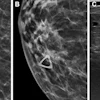
![A normal mammogram confirmed by three-year radiologic follow-up illustrates reader-marked regions of interest (ROIs) during (A) unaided (round 1) and (B) artificial intelligence (AI)–assisted (round 2) reading. Each colored dot represents an ROI for recall by a human reader. Readers could mark more than one ROI per case, represented by multiple dots of the same color. During AI-assisted reading, the AI system displayed three visible prompts: two with suspicion of malignancy scores of 35% (left mediolateral oblique [L MLO] and craniocaudal [L CC]) and one with a suspicion of malignancy score of 10% (right craniocaudal [R CC]), shown as polygonal overlays. Without AI, six of 10 readers (60%) marked a false-positive ROI. With AI assistance, this fell to two of 10 (20%). R MLO = right mediolateral oblique.](https://img.auntminnie.com/mindful/smg/workspaces/default/uploads/2026/07/2026-07-14-radiology-mammogram-ai-auto-bias.H0bYO8QlWs.jpg?auto=format%2Ccompress&fit=crop&h=100&q=70&w=100)


![A normal mammogram confirmed by three-year radiologic follow-up illustrates reader-marked regions of interest (ROIs) during (A) unaided (round 1) and (B) artificial intelligence (AI)–assisted (round 2) reading. Each colored dot represents an ROI for recall by a human reader. Readers could mark more than one ROI per case, represented by multiple dots of the same color. During AI-assisted reading, the AI system displayed three visible prompts: two with suspicion of malignancy scores of 35% (left mediolateral oblique [L MLO] and craniocaudal [L CC]) and one with a suspicion of malignancy score of 10% (right craniocaudal [R CC]), shown as polygonal overlays. Without AI, six of 10 readers (60%) marked a false-positive ROI. With AI assistance, this fell to two of 10 (20%). R MLO = right mediolateral oblique.](https://img.auntminnie.com/mindful/smg/workspaces/default/uploads/2026/07/2026-07-14-radiology-mammogram-ai-auto-bias.H0bYO8QlWs.jpg?auto=format%2Ccompress&fit=crop&h=112&q=70&w=112)