
Women who take prescription opioids are no less likely to undergo breast, cervical, and colorectal cancer screening than women who do not take the medications, according to a study published in the current issue of the Annals of Family Medicine.
The findings speak to the concern that addressing patients' pain with opioid medications may diminish compliance with preventive health measures such as cancer screening, wrote a team led by Dr. Alicia Agnoli of the University of California, Davis (Ann Fam Medicine, January/February 2020, Vol. 18:1, pp. 59-65).
The study included data from the 2005 to 2015 Medical Expenditure Panel Surveys of 53,982 women ages 18 or older without cancer and with opioid prescription. The researchers adjusted the data for the women's sociodemographic characteristics, health status, health conditions, usual source of healthcare, and level of healthcare use.
Of the total patient cohort, 15.8% reported at least one opioid prescription. Compared with women not prescribed opioids, those who were prescribed them were five times more likely to visit their doctor. Without any adjustment for the number of visits, women prescribed opioids were more likely to receive all three cancer screenings, Agnoli and colleagues discovered.
Whether women receive cancer screening may be driven largely by how often they see their physician, according to the team.
"In a nationally representative sample, receipt of opioid prescriptions was not associated with less recommended cancer screenings," the group concluded. "Rather, women receiving opioids had greater adjusted odds of receiving breast, cervical, and colorectal cancer screening."
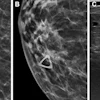


![A normal mammogram confirmed by three-year radiologic follow-up illustrates reader-marked regions of interest (ROIs) during (A) unaided (round 1) and (B) artificial intelligence (AI)–assisted (round 2) reading. Each colored dot represents an ROI for recall by a human reader. Readers could mark more than one ROI per case, represented by multiple dots of the same color. During AI-assisted reading, the AI system displayed three visible prompts: two with suspicion of malignancy scores of 35% (left mediolateral oblique [L MLO] and craniocaudal [L CC]) and one with a suspicion of malignancy score of 10% (right craniocaudal [R CC]), shown as polygonal overlays. Without AI, six of 10 readers (60%) marked a false-positive ROI. With AI assistance, this fell to two of 10 (20%). R MLO = right mediolateral oblique.](https://img.auntminnie.com/mindful/smg/workspaces/default/uploads/2026/07/2026-07-14-radiology-mammogram-ai-auto-bias.H0bYO8QlWs.jpg?auto=format%2Ccompress&fit=crop&h=100&q=70&w=100)


![A normal mammogram confirmed by three-year radiologic follow-up illustrates reader-marked regions of interest (ROIs) during (A) unaided (round 1) and (B) artificial intelligence (AI)–assisted (round 2) reading. Each colored dot represents an ROI for recall by a human reader. Readers could mark more than one ROI per case, represented by multiple dots of the same color. During AI-assisted reading, the AI system displayed three visible prompts: two with suspicion of malignancy scores of 35% (left mediolateral oblique [L MLO] and craniocaudal [L CC]) and one with a suspicion of malignancy score of 10% (right craniocaudal [R CC]), shown as polygonal overlays. Without AI, six of 10 readers (60%) marked a false-positive ROI. With AI assistance, this fell to two of 10 (20%). R MLO = right mediolateral oblique.](https://img.auntminnie.com/mindful/smg/workspaces/default/uploads/2026/07/2026-07-14-radiology-mammogram-ai-auto-bias.H0bYO8QlWs.jpg?auto=format%2Ccompress&fit=crop&h=112&q=70&w=112)